

Guía de Dolor por Tatuaje: Áreas del Cuerpo de Menor a Mayor Dolor Explicadas
Varios factores se combinan para dar forma a cómo se siente un tatuaje al aplicarlo. El dolor siempre es personal, pero estas son las principales variables para el nivel de dolor al hacerse un tatuaje:
Parte del cuerpo
Dónde se colocará tu tatuaje en el cuerpo puede afectar el dolor asociado con el diseño. Las áreas con piel delgada, muchas terminaciones nerviosas o hueso cercano a la superficie generalmente duelen más. Las áreas con más músculo y acolchado de grasa suelen doler menos.
Tolerancia al dolor
Las personas procesan el dolor de manera diferente. Una persona puede describir una ubicación como "agudo pero soportable", otra como "muy intenso". Tus niveles de estrés, sueño y experiencias pasadas desempeñan un papel en tu tolerancia al dolor del tatuaje.
Tamaño y complejidad del tatuaje
Un tatuaje de línea pequeño en un lugar sensible puede ser breve y manejable en términos de dolor. Una pieza grande y sombreada en la misma área tomará más tiempo y probablemente se sentirá más intensa. Más pasadas sobre la piel generalmente significan más incomodidad en un área.
Técnica del artista
Los artistas experimentados tienden a trabajar de manera más eficiente y constante. Un movimiento controlado y constante a menudo se siente mejor que una mano pesada o desigual (¡por esto es importante elegir un artista que te guste y en quien confíes!).
Hidratación y salud general
Descansar bien, estar hidratado y haber comido una comida sólida antes de tu cita puede hacer una diferencia notable. La deshidratación, el hambre o el agotamiento pueden hacer que el dolor se sienta más agudo. La ingesta de cafeína también puede aumentar la sensibilidad al dolor, así que asegúrate de no estar sobrecafeinado antes de hacerte el nuevo tatuaje.
Estilo del tatuajeLas líneas audaces y densamente saturadas y la saturación de color intensa a menudo se sienten más fuertes que el trabajo de puntillismo ligero o el trazo de línea mínimo. Las pasadas repetidas en el mismo lugar siempre aumentarán la sensación.
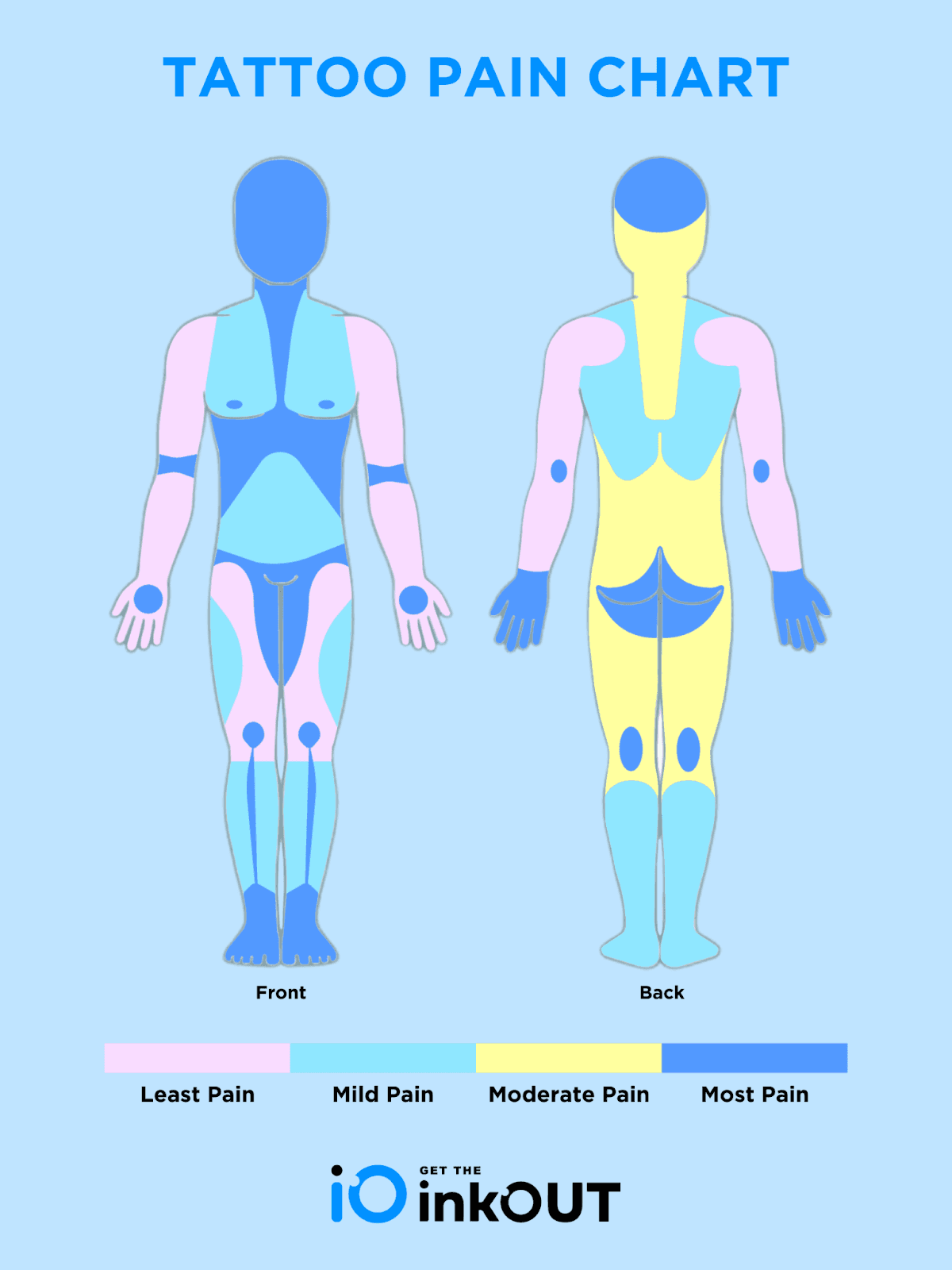
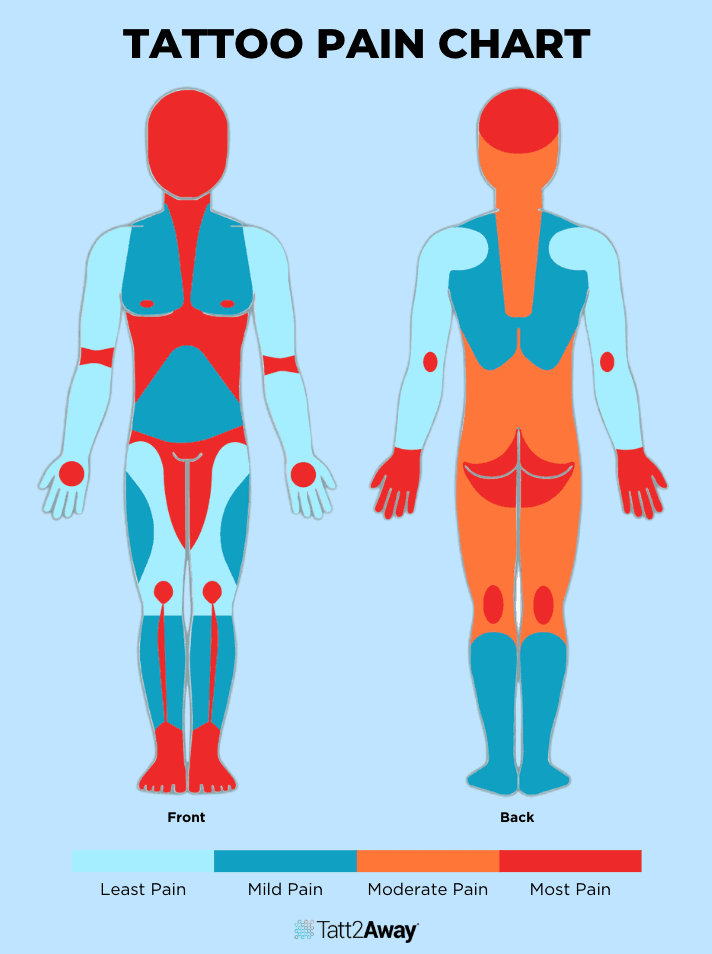
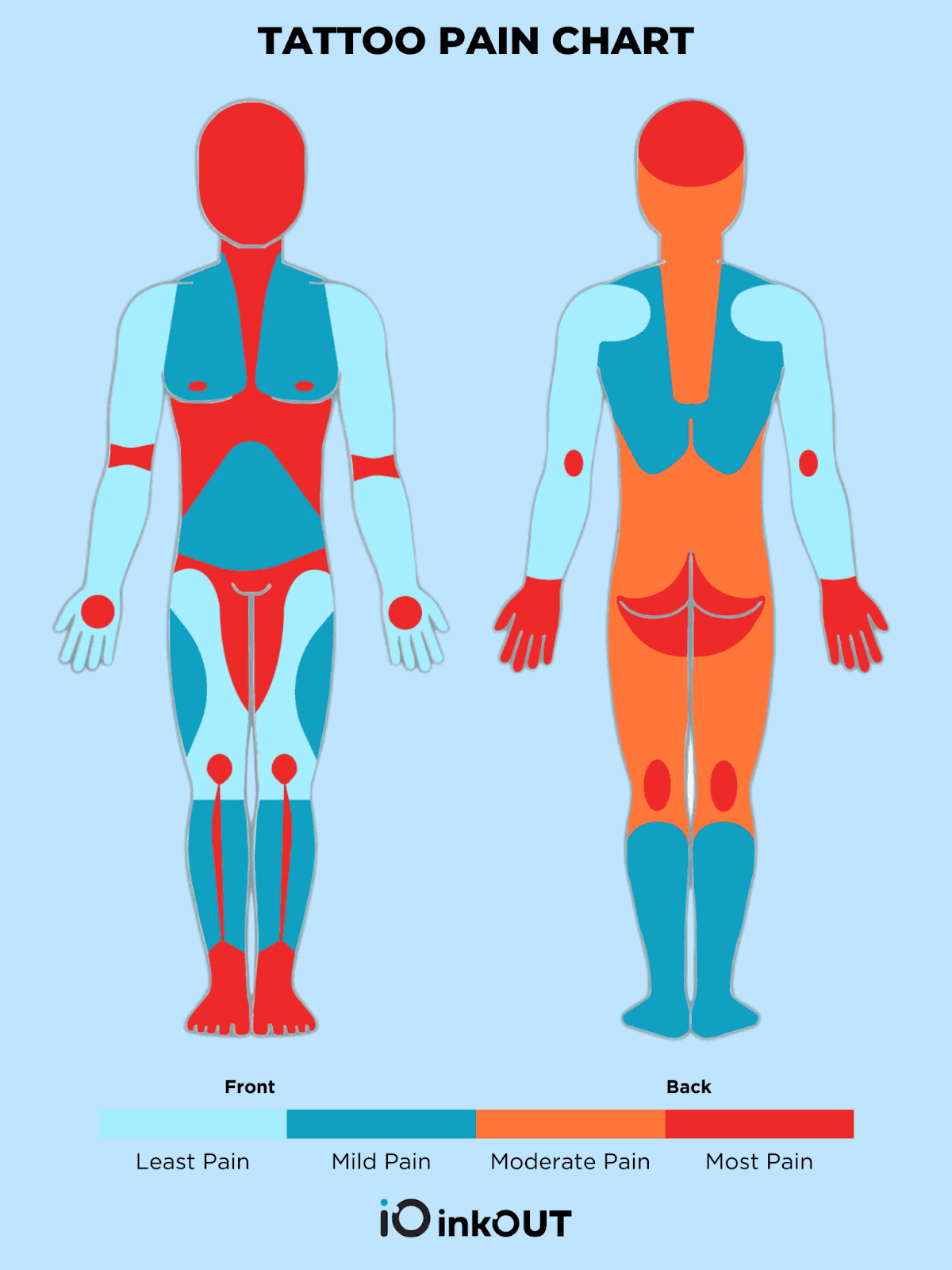
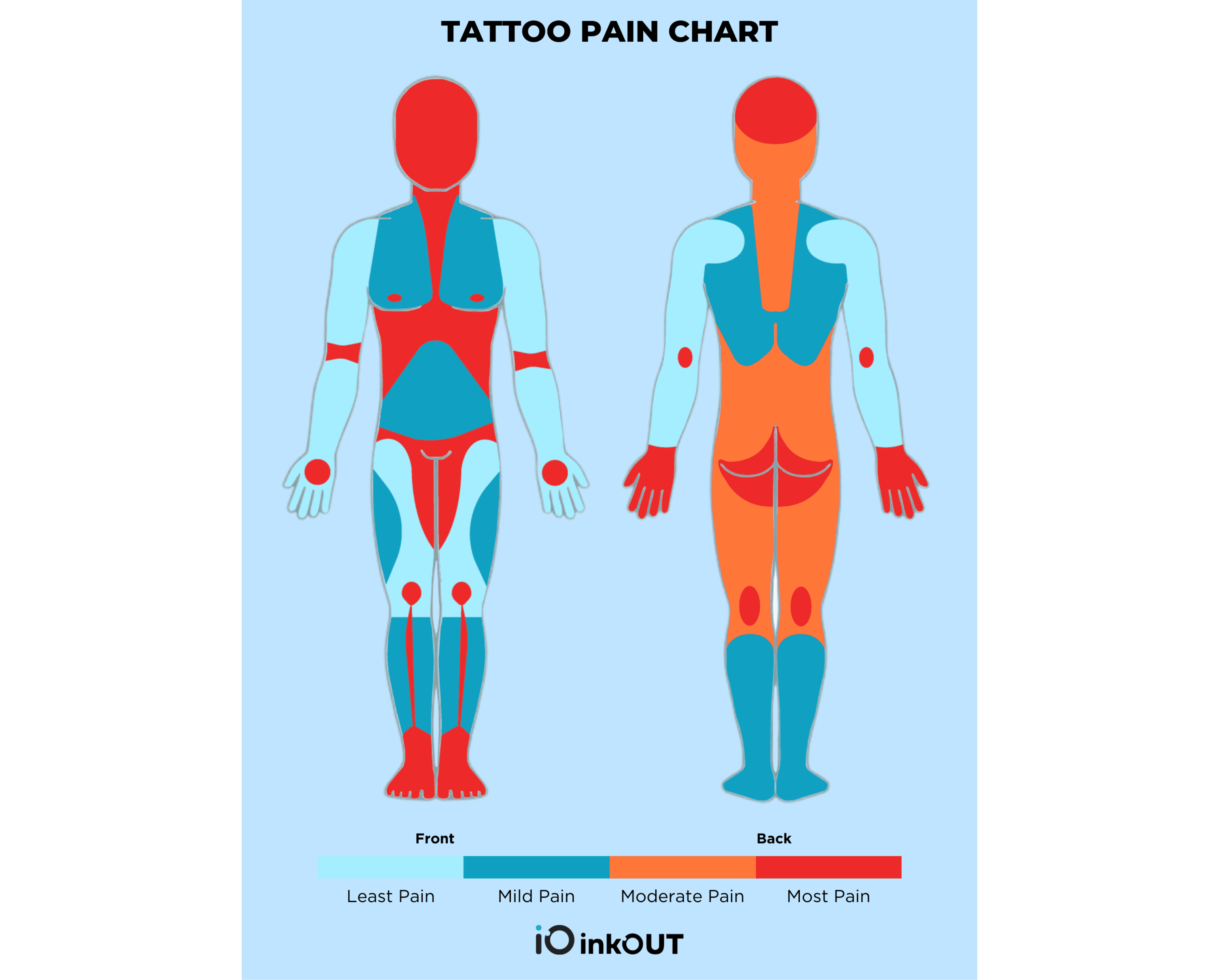
Tabla de Dolor de Tatuaje (Parte Delantera + Trasera del Cuerpo)
Así es como la mayoría de las personas y los artistas describen las áreas de dolor del tatuaje en todo el cuerpo:
Áreas con menos grasa, más nervios y piel delgada sobre hueso → mayor dolor
Áreas con más músculo, más acolchado y menos nervios → menor dolor
Áreas Más Dolorosas para Hacerse un Tatuaje
Estas son comúnmente reportadas como las áreas más dolorosas para tatuarse. Combinan piel delgada, hueso expuesto y alta densidad de nervios.
Caja Torácica
Piel delgada sobre hueso y mucho movimiento con cada respiración hacen de esta una de las ubicaciones de mayor dolor.
Pies y Tobillos
Muy poco acolchado y muchos nervios cerca de la superficie. Los diseños simples aquí pueden sentirse más agudos de lo que su tamaño sugiere.
Manos y Dedos
Área pequeña, piel delgada y muchos tendones. Las sesiones suelen ser cortas, pero el dolor puede ser agudo y directo.
Columna Vertebral
Tatuarse directamente sobre las vértebras a menudo se siente intenso e incómodo. La combinación de hueso y nervios centrales hace de esta una área de alto dolor en la mayoría de las tablas.
Rodillas y Codos
Piel delgada estirada sobre hueso. Tanto el frente (rótula, punta del codo) como los pliegues pueden ser sensibles.
Axilas
Alta densidad de nervios y movimiento constante. Considerada ampliamente como una de las ubicaciones más dolorosas para un tatuaje.
Ingle / Muslo Interno
Piel delgada y sensible y muchos ganglios linfáticos residen aquí. Incluso los diseños pequeños aquí normalmente se califican como altos en niveles de dolor de tatuaje.
Cuello y Garganta
Piel delgada, muchas terminaciones nerviosas y vibración sobre estructuras sensibles hacen de estas áreas intensas para la mayoría de las personas.
Áreas de Dolor Moderado
Estas áreas suelen estar en el rango de “medio” en la clasificación de dolor de tatuajes: notable, pero manejable para la mayoría de los clientes.
Pecho
El centro del pecho y sobre el esternón pueden sentirse fuertes, especialmente para contexturas delgadas. Las áreas con más músculo pueden sentirse ligeramente menos intensas.
Estómago
El tejido suave significa menos contacto óseo, pero la piel puede ser sensible, especialmente alrededor del ombligo y en los lados.
Parte Baja de la Espalda
Cerca de la columna puede ser más intenso; áreas con más músculo y tejido tienden a sentirse moderadas.
Nalgas
Bastante acolchado, pero la presión y el estiramiento de la piel pueden seguir siendo sensibles, especialmente cerca de la parte baja de la espalda o el muslo superior.
Pantorrillas
El músculo y el acolchado hacen de esta un área de rango medio para muchas personas. A menudo recomendado cuando alguien ya sabe cómo maneja su cuerpo el dolor del tatuaje.
Áreas Menos Dolorosas
Estos son los lugares menos dolorosos para hacerse un tatuaje para muchas personas, especialmente para principiantes. Generalmente tienen más músculo, más grasa o menos nervios expuestos.
Brazos Superiores
El brazo superior exterior es uno de los lugares de bajo dolor más recomendados. Bueno para primeros tatuajes y trabajos más grandes.
Hombros
Forma redondeada, buen acolchado y relativamente menos nervios hacen del hombro exterior una colocación común “más fácil”.
Muslos Externos
Mucho músculo y tejido suave. El muslo exterior tiende a sentirse mucho menos intenso que el muslo interior.
Antebrazos
El antebrazo exterior usualmente se clasifica de bajo a moderado en una guía de dolor de tatuajes, especialmente para diseños de tamaño medio. Es un lugar popular para personas que quieren tinta visible con un dolor manejable.
Cómo Reducir el Dolor del Tatuaje
No puedes eliminar el dolor por completo, pero puedes hacerlo más manejable.
Hidrátate bien el día antes y el día de tu cita
Come una comida completa 1-2 horas antes de sentarte para tu tatuaje
Evita el alcohol y sustancias anticoagulantes
Controla tu respiración durante la sesión (respiraciones lentas y constantes)
Elige un artista calificado en quien confíes
Toma descansos cortos si empiezas a sentirte abrumado
Varios factores se combinan para dar forma a cómo se siente un tatuaje al aplicarlo. El dolor siempre es personal, pero estas son las principales variables para el nivel de dolor al hacerse un tatuaje:
Parte del cuerpo
Dónde se colocará tu tatuaje en el cuerpo puede afectar el dolor asociado con el diseño. Las áreas con piel delgada, muchas terminaciones nerviosas o hueso cercano a la superficie generalmente duelen más. Las áreas con más músculo y acolchado de grasa suelen doler menos.
Tolerancia al dolor
Las personas procesan el dolor de manera diferente. Una persona puede describir una ubicación como "agudo pero soportable", otra como "muy intenso". Tus niveles de estrés, sueño y experiencias pasadas desempeñan un papel en tu tolerancia al dolor del tatuaje.
Tamaño y complejidad del tatuaje
Un tatuaje de línea pequeño en un lugar sensible puede ser breve y manejable en términos de dolor. Una pieza grande y sombreada en la misma área tomará más tiempo y probablemente se sentirá más intensa. Más pasadas sobre la piel generalmente significan más incomodidad en un área.
Técnica del artista
Los artistas experimentados tienden a trabajar de manera más eficiente y constante. Un movimiento controlado y constante a menudo se siente mejor que una mano pesada o desigual (¡por esto es importante elegir un artista que te guste y en quien confíes!).
Hidratación y salud general
Descansar bien, estar hidratado y haber comido una comida sólida antes de tu cita puede hacer una diferencia notable. La deshidratación, el hambre o el agotamiento pueden hacer que el dolor se sienta más agudo. La ingesta de cafeína también puede aumentar la sensibilidad al dolor, así que asegúrate de no estar sobrecafeinado antes de hacerte el nuevo tatuaje.
Estilo del tatuajeLas líneas audaces y densamente saturadas y la saturación de color intensa a menudo se sienten más fuertes que el trabajo de puntillismo ligero o el trazo de línea mínimo. Las pasadas repetidas en el mismo lugar siempre aumentarán la sensación.
Tabla de Dolor de Tatuaje (Parte Delantera + Trasera del Cuerpo)
Así es como la mayoría de las personas y los artistas describen las áreas de dolor del tatuaje en todo el cuerpo:
Áreas con menos grasa, más nervios y piel delgada sobre hueso → mayor dolor
Áreas con más músculo, más acolchado y menos nervios → menor dolor
Áreas Más Dolorosas para Hacerse un Tatuaje
Estas son comúnmente reportadas como las áreas más dolorosas para tatuarse. Combinan piel delgada, hueso expuesto y alta densidad de nervios.
Caja Torácica
Piel delgada sobre hueso y mucho movimiento con cada respiración hacen de esta una de las ubicaciones de mayor dolor.
Pies y Tobillos
Muy poco acolchado y muchos nervios cerca de la superficie. Los diseños simples aquí pueden sentirse más agudos de lo que su tamaño sugiere.
Manos y Dedos
Área pequeña, piel delgada y muchos tendones. Las sesiones suelen ser cortas, pero el dolor puede ser agudo y directo.
Columna Vertebral
Tatuarse directamente sobre las vértebras a menudo se siente intenso e incómodo. La combinación de hueso y nervios centrales hace de esta una área de alto dolor en la mayoría de las tablas.
Rodillas y Codos
Piel delgada estirada sobre hueso. Tanto el frente (rótula, punta del codo) como los pliegues pueden ser sensibles.
Axilas
Alta densidad de nervios y movimiento constante. Considerada ampliamente como una de las ubicaciones más dolorosas para un tatuaje.
Ingle / Muslo Interno
Piel delgada y sensible y muchos ganglios linfáticos residen aquí. Incluso los diseños pequeños aquí normalmente se califican como altos en niveles de dolor de tatuaje.
Cuello y Garganta
Piel delgada, muchas terminaciones nerviosas y vibración sobre estructuras sensibles hacen de estas áreas intensas para la mayoría de las personas.
Áreas de Dolor Moderado
Estas áreas suelen estar en el rango de “medio” en la clasificación de dolor de tatuajes: notable, pero manejable para la mayoría de los clientes.
Pecho
El centro del pecho y sobre el esternón pueden sentirse fuertes, especialmente para contexturas delgadas. Las áreas con más músculo pueden sentirse ligeramente menos intensas.
Estómago
El tejido suave significa menos contacto óseo, pero la piel puede ser sensible, especialmente alrededor del ombligo y en los lados.
Parte Baja de la Espalda
Cerca de la columna puede ser más intenso; áreas con más músculo y tejido tienden a sentirse moderadas.
Nalgas
Bastante acolchado, pero la presión y el estiramiento de la piel pueden seguir siendo sensibles, especialmente cerca de la parte baja de la espalda o el muslo superior.
Pantorrillas
El músculo y el acolchado hacen de esta un área de rango medio para muchas personas. A menudo recomendado cuando alguien ya sabe cómo maneja su cuerpo el dolor del tatuaje.
Áreas Menos Dolorosas
Estos son los lugares menos dolorosos para hacerse un tatuaje para muchas personas, especialmente para principiantes. Generalmente tienen más músculo, más grasa o menos nervios expuestos.
Brazos Superiores
El brazo superior exterior es uno de los lugares de bajo dolor más recomendados. Bueno para primeros tatuajes y trabajos más grandes.
Hombros
Forma redondeada, buen acolchado y relativamente menos nervios hacen del hombro exterior una colocación común “más fácil”.
Muslos Externos
Mucho músculo y tejido suave. El muslo exterior tiende a sentirse mucho menos intenso que el muslo interior.
Antebrazos
El antebrazo exterior usualmente se clasifica de bajo a moderado en una guía de dolor de tatuajes, especialmente para diseños de tamaño medio. Es un lugar popular para personas que quieren tinta visible con un dolor manejable.
Cómo Reducir el Dolor del Tatuaje
No puedes eliminar el dolor por completo, pero puedes hacerlo más manejable.
Hidrátate bien el día antes y el día de tu cita
Come una comida completa 1-2 horas antes de sentarte para tu tatuaje
Evita el alcohol y sustancias anticoagulantes
Controla tu respiración durante la sesión (respiraciones lentas y constantes)
Elige un artista calificado en quien confíes
Toma descansos cortos si empiezas a sentirte abrumado
Varios factores se combinan para dar forma a cómo se siente un tatuaje al aplicarlo. El dolor siempre es personal, pero estas son las principales variables para el nivel de dolor al hacerse un tatuaje:
Parte del cuerpo
Dónde se colocará tu tatuaje en el cuerpo puede afectar el dolor asociado con el diseño. Las áreas con piel delgada, muchas terminaciones nerviosas o hueso cercano a la superficie generalmente duelen más. Las áreas con más músculo y acolchado de grasa suelen doler menos.
Tolerancia al dolor
Las personas procesan el dolor de manera diferente. Una persona puede describir una ubicación como "agudo pero soportable", otra como "muy intenso". Tus niveles de estrés, sueño y experiencias pasadas desempeñan un papel en tu tolerancia al dolor del tatuaje.
Tamaño y complejidad del tatuaje
Un tatuaje de línea pequeño en un lugar sensible puede ser breve y manejable en términos de dolor. Una pieza grande y sombreada en la misma área tomará más tiempo y probablemente se sentirá más intensa. Más pasadas sobre la piel generalmente significan más incomodidad en un área.
Técnica del artista
Los artistas experimentados tienden a trabajar de manera más eficiente y constante. Un movimiento controlado y constante a menudo se siente mejor que una mano pesada o desigual (¡por esto es importante elegir un artista que te guste y en quien confíes!).
Hidratación y salud general
Descansar bien, estar hidratado y haber comido una comida sólida antes de tu cita puede hacer una diferencia notable. La deshidratación, el hambre o el agotamiento pueden hacer que el dolor se sienta más agudo. La ingesta de cafeína también puede aumentar la sensibilidad al dolor, así que asegúrate de no estar sobrecafeinado antes de hacerte el nuevo tatuaje.
Estilo del tatuajeLas líneas audaces y densamente saturadas y la saturación de color intensa a menudo se sienten más fuertes que el trabajo de puntillismo ligero o el trazo de línea mínimo. Las pasadas repetidas en el mismo lugar siempre aumentarán la sensación.
Tabla de Dolor de Tatuaje (Parte Delantera + Trasera del Cuerpo)
Así es como la mayoría de las personas y los artistas describen las áreas de dolor del tatuaje en todo el cuerpo:
Áreas con menos grasa, más nervios y piel delgada sobre hueso → mayor dolor
Áreas con más músculo, más acolchado y menos nervios → menor dolor
Áreas Más Dolorosas para Hacerse un Tatuaje
Estas son comúnmente reportadas como las áreas más dolorosas para tatuarse. Combinan piel delgada, hueso expuesto y alta densidad de nervios.
Caja Torácica
Piel delgada sobre hueso y mucho movimiento con cada respiración hacen de esta una de las ubicaciones de mayor dolor.
Pies y Tobillos
Muy poco acolchado y muchos nervios cerca de la superficie. Los diseños simples aquí pueden sentirse más agudos de lo que su tamaño sugiere.
Manos y Dedos
Área pequeña, piel delgada y muchos tendones. Las sesiones suelen ser cortas, pero el dolor puede ser agudo y directo.
Columna Vertebral
Tatuarse directamente sobre las vértebras a menudo se siente intenso e incómodo. La combinación de hueso y nervios centrales hace de esta una área de alto dolor en la mayoría de las tablas.
Rodillas y Codos
Piel delgada estirada sobre hueso. Tanto el frente (rótula, punta del codo) como los pliegues pueden ser sensibles.
Axilas
Alta densidad de nervios y movimiento constante. Considerada ampliamente como una de las ubicaciones más dolorosas para un tatuaje.
Ingle / Muslo Interno
Piel delgada y sensible y muchos ganglios linfáticos residen aquí. Incluso los diseños pequeños aquí normalmente se califican como altos en niveles de dolor de tatuaje.
Cuello y Garganta
Piel delgada, muchas terminaciones nerviosas y vibración sobre estructuras sensibles hacen de estas áreas intensas para la mayoría de las personas.
Áreas de Dolor Moderado
Estas áreas suelen estar en el rango de “medio” en la clasificación de dolor de tatuajes: notable, pero manejable para la mayoría de los clientes.
Pecho
El centro del pecho y sobre el esternón pueden sentirse fuertes, especialmente para contexturas delgadas. Las áreas con más músculo pueden sentirse ligeramente menos intensas.
Estómago
El tejido suave significa menos contacto óseo, pero la piel puede ser sensible, especialmente alrededor del ombligo y en los lados.
Parte Baja de la Espalda
Cerca de la columna puede ser más intenso; áreas con más músculo y tejido tienden a sentirse moderadas.
Nalgas
Bastante acolchado, pero la presión y el estiramiento de la piel pueden seguir siendo sensibles, especialmente cerca de la parte baja de la espalda o el muslo superior.
Pantorrillas
El músculo y el acolchado hacen de esta un área de rango medio para muchas personas. A menudo recomendado cuando alguien ya sabe cómo maneja su cuerpo el dolor del tatuaje.
Áreas Menos Dolorosas
Estos son los lugares menos dolorosos para hacerse un tatuaje para muchas personas, especialmente para principiantes. Generalmente tienen más músculo, más grasa o menos nervios expuestos.
Brazos Superiores
El brazo superior exterior es uno de los lugares de bajo dolor más recomendados. Bueno para primeros tatuajes y trabajos más grandes.
Hombros
Forma redondeada, buen acolchado y relativamente menos nervios hacen del hombro exterior una colocación común “más fácil”.
Muslos Externos
Mucho músculo y tejido suave. El muslo exterior tiende a sentirse mucho menos intenso que el muslo interior.
Antebrazos
El antebrazo exterior usualmente se clasifica de bajo a moderado en una guía de dolor de tatuajes, especialmente para diseños de tamaño medio. Es un lugar popular para personas que quieren tinta visible con un dolor manejable.
Cómo Reducir el Dolor del Tatuaje
No puedes eliminar el dolor por completo, pero puedes hacerlo más manejable.
Hidrátate bien el día antes y el día de tu cita
Come una comida completa 1-2 horas antes de sentarte para tu tatuaje
Evita el alcohol y sustancias anticoagulantes
Controla tu respiración durante la sesión (respiraciones lentas y constantes)
Elige un artista calificado en quien confíes
Toma descansos cortos si empiezas a sentirte abrumado
Most Painful Areas to Get a Tattoo
These are commonly reported as the most painful tattoo spots. They combine thin skin, exposed bone, and high nerve density.
Ribcage
Thin skin over bone and lots of movement with each breath make this one of the highest-pain placements.
Feet and Ankles
Very little padding and many nerves close to the surface. Simple designs here can feel sharper than their size suggests.
Hands and Fingers
Small area, thin skin, and lots of tendons. Sessions are usually short, but the pain can be sharp and direct. Fingers rank among the most painful areas for both getting and removing tattoos. The full guide on finger tattoos, including design, healing, fading, and aftercare, covers what that means long term.
Spine
Tattooing directly over the vertebrae often feels intense and uncomfortable. The combination of bone and central nerves makes this a high-pain area on most charts.
Knees and Elbows
Thin skin stretched over bone. Both the front (kneecap, elbow point) and folds can be sensitive.
Armpits
High nerve density and constant movement. Widely considered one of the most painful placements for a tattoo.
Groin / Inner Thigh
Thin, sensitive skin and many lymph nodes reside here. Even small designs here are usually rated as high on tattoo pain levels.
Neck and Throat
Thin skin, many nerve endings, and vibration over sensitive structures make these areas intense for most people.
Moderately Painful Areas
These areas often land in the “medium” range in tattoo pain ranking - noticeable, but manageable for most clients.
Chest
The center of the chest and over the sternum can feel strong, especially for lean builds. Areas with more muscle may feel slightly less intense.
Stomach
Soft tissue means less bone contact, but the skin can be sensitive, especially around the navel and on the sides.
Lower Back
Near the spine can be more intense; areas with more muscle and tissue tend to feel moderate.
Buttocks
Plenty of padding, but pressure and stretching of the skin can still feel tender, especially close to the lower back or upper thigh.
Calves
Muscle and padding make this a mid-range area for many people. Often recommended once someone knows how their body handles tattoo pain.
Least Painful Areas
These are the least painful places to get a tattoo for many people, especially first-timers. They generally have more muscle, more fat, or fewer exposed nerves.
Upper Arms
The outer upper arm is one of the most commonly recommended low-pain spots. Good for first tattoos and larger work.
Shoulders
Rounded shape, decent padding, and relatively fewer nerves make the outer shoulder a common “easier” placement.
Outer Thighs
Lots of muscle and soft tissue. The outer thigh tends to feel much less intense than the inner thigh.
Forearms
The outer forearm usually rates low to moderate on a tattoo pain guide, especially for medium-sized designs. It’s a popular spot for people who want visible ink with manageable pain.
How to Reduce Tattoo Pain
You can’t remove pain completely, but you can make it more manageable.
Hydrate well the day before and day of your appointment
Eat a full meal 1-2 hours before you sit down for your tattoo
Avoid alcohol and blood-thinning substances
Control your breathing during the session (steady, slow breaths)
Choose a skilled artist whose work you trust
Take short breaks if you start to feel overwhelmed
These simple steps help keep your body more stable and your pain more predictable.
Aftercare to Help with Pain
A lot of tattoo discomfort happens after you leave the studio. Good aftercare keeps pain down and healing on track.
Keep the tattoo clean as directed by your artist
Moisturize with products they recommend
Avoid picking at flaking skin or scabs
Stay out of direct sun exposure on the fresh tattoo
Wear loose clothing to prevent rubbing
Interesting Tattoo Facts
A few numbers provide useful context around tattoos, pain, and long-term choices:
About 32% of U.S. adults have at least one tattoo (Pew Research Center)
Roughly 24% of tattooed Americans say they regret at least one of their tattoos (Pew Research Center)
These figures don’t say how painful tattoos are, but they do show how common tattoos are - and how often people might change their minds about tattoos they’ve had done. If you find yourself regretting a tattoo, we’re here to provide a health-conscious, non-laser tattoo removal option for you.
When Pain Affects Your Tattoo Decisions
Pain doesn’t just matter in the moment. It can influence tattoo pain areas you choose, how big you go, and whether you compromise on the design or placement you actually wanted.
Some people:
Pick an easier, low-pain area instead of the spot that fit the design best
Go smaller or simpler than planned to “get it over with”
Avoid certain placements entirely after one very painful session
Sometimes those choices feel right long-term. Other times, they lead to regret about placement, size, or design - not just the tattoo itself.
If pain influenced a past decision and you’re no longer happy with the result, options like tattoo revision, cover-up, or full removal can help reset your canvas. Non-laser approaches such as inkOUT® work with your skin’s natural healing process to expel ink out of the skin, and can be useful when someone wants to change or reduce an existing tattoo before getting something new.
A tattoo pain chart is only a guide; pain will always vary from person to person, and even from session to session. But knowing the tattoo pain by body part, the most and least painful placements, and the basic tattoo pain factors can give you a clearer starting point so you can plan your tattoo around what you want on your body, not just what you’re worried might hurt.
You can plan your tattoo around what you want on your body, not just what you’re worried might hurt.
Most Painful Areas to Get a Tattoo
These are commonly reported as the most painful tattoo spots. They combine thin skin, exposed bone, and high nerve density.
Ribcage
Thin skin over bone and lots of movement with each breath make this one of the highest-pain placements.
Feet and Ankles
Very little padding and many nerves close to the surface. Simple designs here can feel sharper than their size suggests.
Hands and Fingers
Small area, thin skin, and lots of tendons. Sessions are usually short, but the pain can be sharp and direct. Fingers rank among the most painful areas for both getting and removing tattoos. The full guide on finger tattoos, including design, healing, fading, and aftercare, covers what that means long term.
Spine
Tattooing directly over the vertebrae often feels intense and uncomfortable. The combination of bone and central nerves makes this a high-pain area on most charts.
Knees and Elbows
Thin skin stretched over bone. Both the front (kneecap, elbow point) and folds can be sensitive.
Armpits
High nerve density and constant movement. Widely considered one of the most painful placements for a tattoo.
Groin / Inner Thigh
Thin, sensitive skin and many lymph nodes reside here. Even small designs here are usually rated as high on tattoo pain levels.
Neck and Throat
Thin skin, many nerve endings, and vibration over sensitive structures make these areas intense for most people.
Moderately Painful Areas
These areas often land in the “medium” range in tattoo pain ranking - noticeable, but manageable for most clients.
Chest
The center of the chest and over the sternum can feel strong, especially for lean builds. Areas with more muscle may feel slightly less intense.
Stomach
Soft tissue means less bone contact, but the skin can be sensitive, especially around the navel and on the sides.
Lower Back
Near the spine can be more intense; areas with more muscle and tissue tend to feel moderate.
Buttocks
Plenty of padding, but pressure and stretching of the skin can still feel tender, especially close to the lower back or upper thigh.
Calves
Muscle and padding make this a mid-range area for many people. Often recommended once someone knows how their body handles tattoo pain.
Least Painful Areas
These are the least painful places to get a tattoo for many people, especially first-timers. They generally have more muscle, more fat, or fewer exposed nerves.
Upper Arms
The outer upper arm is one of the most commonly recommended low-pain spots. Good for first tattoos and larger work.
Shoulders
Rounded shape, decent padding, and relatively fewer nerves make the outer shoulder a common “easier” placement.
Outer Thighs
Lots of muscle and soft tissue. The outer thigh tends to feel much less intense than the inner thigh.
Forearms
The outer forearm usually rates low to moderate on a tattoo pain guide, especially for medium-sized designs. It’s a popular spot for people who want visible ink with manageable pain.
How to Reduce Tattoo Pain
You can’t remove pain completely, but you can make it more manageable.
Hydrate well the day before and day of your appointment
Eat a full meal 1-2 hours before you sit down for your tattoo
Avoid alcohol and blood-thinning substances
Control your breathing during the session (steady, slow breaths)
Choose a skilled artist whose work you trust
Take short breaks if you start to feel overwhelmed
These simple steps help keep your body more stable and your pain more predictable.
Aftercare to Help with Pain
A lot of tattoo discomfort happens after you leave the studio. Good aftercare keeps pain down and healing on track.
Keep the tattoo clean as directed by your artist
Moisturize with products they recommend
Avoid picking at flaking skin or scabs
Stay out of direct sun exposure on the fresh tattoo
Wear loose clothing to prevent rubbing
Interesting Tattoo Facts
A few numbers provide useful context around tattoos, pain, and long-term choices:
About 32% of U.S. adults have at least one tattoo (Pew Research Center)
Roughly 24% of tattooed Americans say they regret at least one of their tattoos (Pew Research Center)
These figures don’t say how painful tattoos are, but they do show how common tattoos are - and how often people might change their minds about tattoos they’ve had done. If you find yourself regretting a tattoo, we’re here to provide a health-conscious, non-laser tattoo removal option for you.
When Pain Affects Your Tattoo Decisions
Pain doesn’t just matter in the moment. It can influence tattoo pain areas you choose, how big you go, and whether you compromise on the design or placement you actually wanted.
Some people:
Pick an easier, low-pain area instead of the spot that fit the design best
Go smaller or simpler than planned to “get it over with”
Avoid certain placements entirely after one very painful session
Sometimes those choices feel right long-term. Other times, they lead to regret about placement, size, or design - not just the tattoo itself.
If pain influenced a past decision and you’re no longer happy with the result, options like tattoo revision, cover-up, or full removal can help reset your canvas. Non-laser approaches such as inkOUT® work with your skin’s natural healing process to expel ink out of the skin, and can be useful when someone wants to change or reduce an existing tattoo before getting something new.
A tattoo pain chart is only a guide; pain will always vary from person to person, and even from session to session. But knowing the tattoo pain by body part, the most and least painful placements, and the basic tattoo pain factors can give you a clearer starting point so you can plan your tattoo around what you want on your body, not just what you’re worried might hurt.
You can plan your tattoo around what you want on your body, not just what you’re worried might hurt.
Most Painful Areas to Get a Tattoo
These are commonly reported as the most painful tattoo spots. They combine thin skin, exposed bone, and high nerve density.
Ribcage
Thin skin over bone and lots of movement with each breath make this one of the highest-pain placements.
Feet and Ankles
Very little padding and many nerves close to the surface. Simple designs here can feel sharper than their size suggests.
Hands and Fingers
Small area, thin skin, and lots of tendons. Sessions are usually short, but the pain can be sharp and direct. Fingers rank among the most painful areas for both getting and removing tattoos. The full guide on finger tattoos, including design, healing, fading, and aftercare, covers what that means long term.
Spine
Tattooing directly over the vertebrae often feels intense and uncomfortable. The combination of bone and central nerves makes this a high-pain area on most charts.
Knees and Elbows
Thin skin stretched over bone. Both the front (kneecap, elbow point) and folds can be sensitive.
Armpits
High nerve density and constant movement. Widely considered one of the most painful placements for a tattoo.
Groin / Inner Thigh
Thin, sensitive skin and many lymph nodes reside here. Even small designs here are usually rated as high on tattoo pain levels.
Neck and Throat
Thin skin, many nerve endings, and vibration over sensitive structures make these areas intense for most people.
Moderately Painful Areas
These areas often land in the “medium” range in tattoo pain ranking - noticeable, but manageable for most clients.
Chest
The center of the chest and over the sternum can feel strong, especially for lean builds. Areas with more muscle may feel slightly less intense.
Stomach
Soft tissue means less bone contact, but the skin can be sensitive, especially around the navel and on the sides.
Lower Back
Near the spine can be more intense; areas with more muscle and tissue tend to feel moderate.
Buttocks
Plenty of padding, but pressure and stretching of the skin can still feel tender, especially close to the lower back or upper thigh.
Calves
Muscle and padding make this a mid-range area for many people. Often recommended once someone knows how their body handles tattoo pain.
Least Painful Areas
These are the least painful places to get a tattoo for many people, especially first-timers. They generally have more muscle, more fat, or fewer exposed nerves.
Upper Arms
The outer upper arm is one of the most commonly recommended low-pain spots. Good for first tattoos and larger work.
Shoulders
Rounded shape, decent padding, and relatively fewer nerves make the outer shoulder a common “easier” placement.
Outer Thighs
Lots of muscle and soft tissue. The outer thigh tends to feel much less intense than the inner thigh.
Forearms
The outer forearm usually rates low to moderate on a tattoo pain guide, especially for medium-sized designs. It’s a popular spot for people who want visible ink with manageable pain.
How to Reduce Tattoo Pain
You can’t remove pain completely, but you can make it more manageable.
Hydrate well the day before and day of your appointment
Eat a full meal 1-2 hours before you sit down for your tattoo
Avoid alcohol and blood-thinning substances
Control your breathing during the session (steady, slow breaths)
Choose a skilled artist whose work you trust
Take short breaks if you start to feel overwhelmed
These simple steps help keep your body more stable and your pain more predictable.
Aftercare to Help with Pain
A lot of tattoo discomfort happens after you leave the studio. Good aftercare keeps pain down and healing on track.
Keep the tattoo clean as directed by your artist
Moisturize with products they recommend
Avoid picking at flaking skin or scabs
Stay out of direct sun exposure on the fresh tattoo
Wear loose clothing to prevent rubbing
Interesting Tattoo Facts
A few numbers provide useful context around tattoos, pain, and long-term choices:
About 32% of U.S. adults have at least one tattoo (Pew Research Center)
Roughly 24% of tattooed Americans say they regret at least one of their tattoos (Pew Research Center)
These figures don’t say how painful tattoos are, but they do show how common tattoos are - and how often people might change their minds about tattoos they’ve had done. If you find yourself regretting a tattoo, we’re here to provide a health-conscious, non-laser tattoo removal option for you.
When Pain Affects Your Tattoo Decisions
Pain doesn’t just matter in the moment. It can influence tattoo pain areas you choose, how big you go, and whether you compromise on the design or placement you actually wanted.
Some people:
Pick an easier, low-pain area instead of the spot that fit the design best
Go smaller or simpler than planned to “get it over with”
Avoid certain placements entirely after one very painful session
Sometimes those choices feel right long-term. Other times, they lead to regret about placement, size, or design - not just the tattoo itself.
If pain influenced a past decision and you’re no longer happy with the result, options like tattoo revision, cover-up, or full removal can help reset your canvas. Non-laser approaches such as inkOUT® work with your skin’s natural healing process to expel ink out of the skin, and can be useful when someone wants to change or reduce an existing tattoo before getting something new.
A tattoo pain chart is only a guide; pain will always vary from person to person, and even from session to session. But knowing the tattoo pain by body part, the most and least painful placements, and the basic tattoo pain factors can give you a clearer starting point so you can plan your tattoo around what you want on your body, not just what you’re worried might hurt.
You can plan your tattoo around what you want on your body, not just what you’re worried might hurt.

Los resultados individuales pueden variar. Es seguro cuando lo realizan especialistas certificados que siguen los protocolos adecuados y las indicaciones de cuidado posterior. Rejuvatek Aesthetics™ es una marca registrada.
Todos los derechos reservados. Rejuvatek Medical Inc © 2025.
Los resultados individuales pueden variar. Es seguro cuando lo realizan especialistas certificados que siguen los protocolos adecuados y las indicaciones de cuidado posterior. Rejuvatek Aesthetics™ es una marca registrada.
Todos los derechos reservados. Rejuvatek Medical Inc © 2025.
Los resultados individuales pueden variar. Es seguro cuando lo realizan especialistas certificados que siguen los protocolos adecuados y las indicaciones de cuidado posterior. Rejuvatek Aesthetics™ es una marca registrada.
Todos los derechos reservados. Rejuvatek Medical Inc © 2025.