

Does Tattoo Removal Leave Scars? What You Need to Know
Tattoos are stories written in ink, lived on skin. But when it’s time to start a new chapter, one question comes up again and again: “Will tattoo removal leave scars?”
At inkOUT™, we believe in transparency. So, here’s the truth about what actually happens to your skin during tattoo removal, why scarring happens with some methods, and how our patented natural process helps your skin heal smoothly and confidently.
First, Let’s Talk About What Tattoo Removal Really Does
A tattoo sits deep in the dermal layer of your skin. That’s why it lasts; it’s below the surface, where your body can’t naturally expel it. Every type of tattoo removal method tries to solve the same problem: how to get that ink out.
But how it’s done makes all the difference.
The Methods: Different Approaches, Different Outcomes
1. Laser Removal
Laser removal works by breaking tattoo ink into microscopic fragments using intense bursts of light. Those ink fragments are then absorbed into your lymphatic system and carried to your lymph nodes for processing (Ho, S.G., Chan, H.H., Yeung, C.K., Nelson, J.S., & Goo, B. (2015)).
While laser removal is widespread, it comes with limitations:
Thermal damage from repeated light exposure can irritate tissue.
Scarring risk rises if healing is interrupted or skin is over-treated.
Incomplete removal is common, especially with lighter colors.
Each session also fragments more ink, and according to research reviewed by Fraser et al., Journal of Exposure Science & Environmental Epidemiology (2022), that process can chemically degrade pigments. Studies have shown laser irradiation produces hazardous compounds such as 2-methyl-5-nitroaniline and 4-nitrotoluene (Vasold et al., 2004), which can be dangerous.
Laser doesn’t cause scarring in every case, but when it happens, it’s often due to overheating, poor aftercare, or multiple overlapping passes that disrupt your skin’s natural barrier and healing process. Scarring with laser can also occur from irritate healing or picking at blisters that may occur.
2. Surgical and Chemical Methods
Other options, such as excision (cutting out the tattoo) or chemical peels, physically remove or blister the skin. They can be effective for very small tattoos, but both carry high scarring risk because they rely on deeper tissue removal or chemical burns to force ink upward, leaving the skin marked permanently.
For a direct comparison of non-laser vs surgical excision, including scarring outcomes and recovery timelines, that breakdown is covered separately.
3. inkOUT™, The Natural Alternative
Here’s where inkOUT™ is different.
Instead of using light, heat, or chemicals, inkOUT™ uses TEPR™ (Trans Epidermal Pigment Release), a precision dermabrasion process that works with your body’s natural healing response.
Our organic, vegan solution helps your skin expel the ink through the surface as part of its natural recovery. As your skin heals, it forms a scab. When that scab falls off, it carries the ink with it, literally removing the tattoo from your body.
No heat
No light fragmentation
No chemical burns
No lymphatic absorption of ink particles
And because the process supports controlled healing, scarring is minimized when proper aftercare is followed.
Does inkOUT™ Cause Scars?
When proper aftercare is followed, inkOUT™ should not cause scarring. TEPRderm™ technology works within the skin’s natural boundaries and does not cause thermal injury. Most clients describe the sensation as similar to getting a tattoo, not a burn.
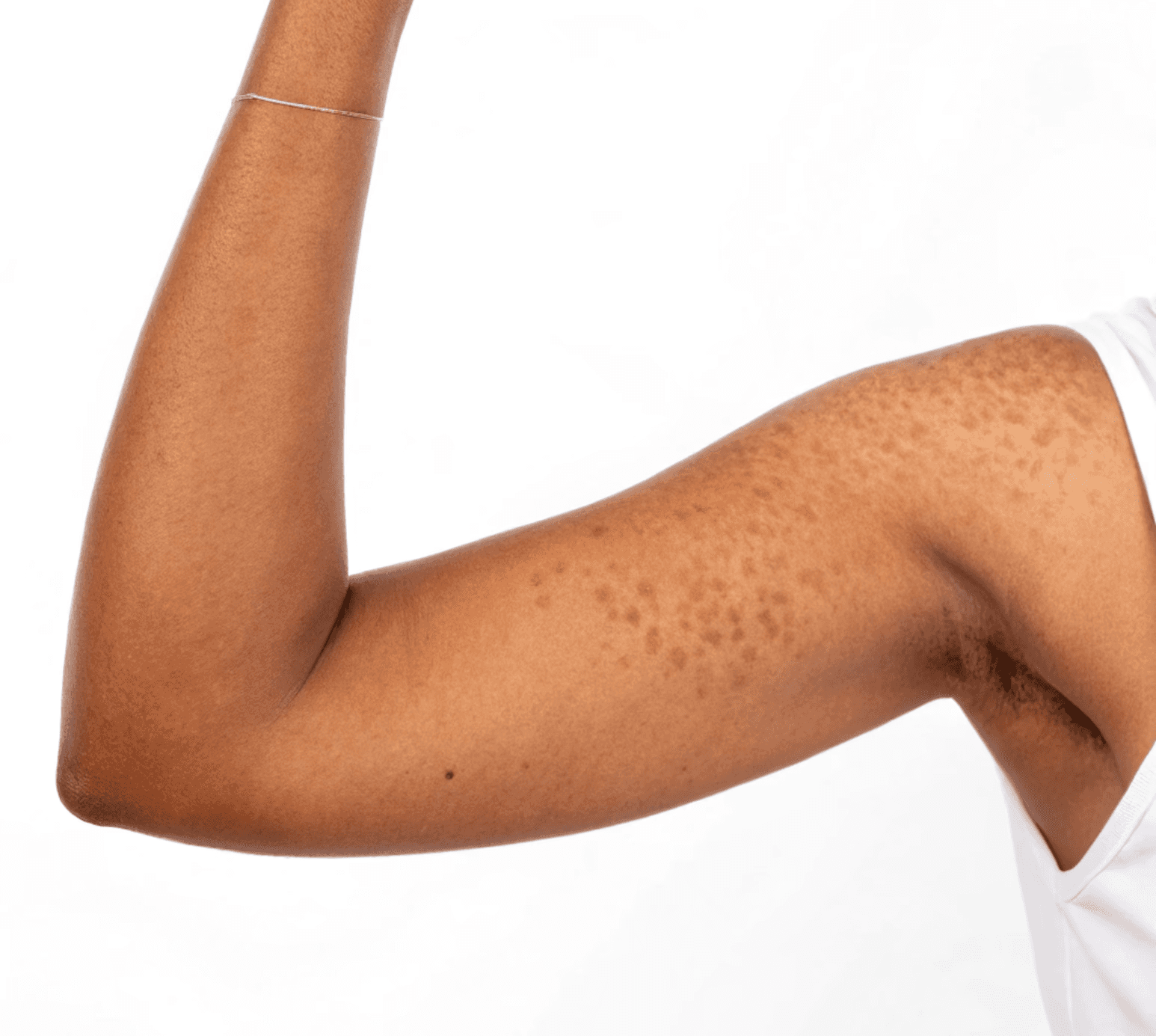
During healing, your skin will show temporary redness and small dots, which is a normal sign of regeneration. These fade as the skin remodels, leaving a smoother, natural appearance.
Proper aftercare is essential.
Keeping the area clean, protected, out of the sun, and untouched while it heals is the difference between a smooth outcome and unnecessary irritation. When you follow your technician’s aftercare instructions, your skin’s natural renewal process takes care of the rest.
Why Scars Happen (and How to Prevent Them)
Tattoo removal scars usually result from one of three things:
Excessive trauma to the skin (from heat, lasers, or cutting).
Infection or irritation during the healing phase.
Improper aftercare such as picking, scratching, or re-injury.
You can avoid all three with the right combination of:
Certified professional care
Proper spacing between sessions (8-12 weeks)
Consistent aftercare compliance
Scarring risk is also influenced by skin type and melanin levels, which affect how the skin responds to treatment and heals between sessions.
At inkOUT™, every technician is trained and certified, and our process follows Class I FDA-registered protocols. When performed correctly and cared for properly, your skin can heal remarkably well: 95%+ complete removal in 12 months or less in most cases.
Final Thoughts: Your Skin, Your Story
So, does tattoo removal leave scars?
It can, but it doesn’t have to.
When you choose a health-conscious, natural process like inkOUT™, you're not just removing ink, you're giving your skin the best chance to heal beautifully and completely. Skin renewal after removal is a question worth understanding before you start.
Our job is to make sure your transformation feels as good as it looks. Because at inkOUT™, we don’t just remove tattoos. We help your body reclaim its story.
Tattoos are stories written in ink, lived on skin. But when it’s time to start a new chapter, one question comes up again and again: “Will tattoo removal leave scars?”
At inkOUT™, we believe in transparency. So, here’s the truth about what actually happens to your skin during tattoo removal, why scarring happens with some methods, and how our patented natural process helps your skin heal smoothly and confidently.
First, Let’s Talk About What Tattoo Removal Really Does
A tattoo sits deep in the dermal layer of your skin. That’s why it lasts; it’s below the surface, where your body can’t naturally expel it. Every type of tattoo removal method tries to solve the same problem: how to get that ink out.
But how it’s done makes all the difference.
The Methods: Different Approaches, Different Outcomes
1. Laser Removal
Laser removal works by breaking tattoo ink into microscopic fragments using intense bursts of light. Those ink fragments are then absorbed into your lymphatic system and carried to your lymph nodes for processing (Ho, S.G., Chan, H.H., Yeung, C.K., Nelson, J.S., & Goo, B. (2015)).
While laser removal is widespread, it comes with limitations:
Thermal damage from repeated light exposure can irritate tissue.
Scarring risk rises if healing is interrupted or skin is over-treated.
Incomplete removal is common, especially with lighter colors.
Each session also fragments more ink, and according to research reviewed by Fraser et al., Journal of Exposure Science & Environmental Epidemiology (2022), that process can chemically degrade pigments. Studies have shown laser irradiation produces hazardous compounds such as 2-methyl-5-nitroaniline and 4-nitrotoluene (Vasold et al., 2004), which can be dangerous.
Laser doesn’t cause scarring in every case, but when it happens, it’s often due to overheating, poor aftercare, or multiple overlapping passes that disrupt your skin’s natural barrier and healing process. Scarring with laser can also occur from irritate healing or picking at blisters that may occur.
2. Surgical and Chemical Methods
Other options, such as excision (cutting out the tattoo) or chemical peels, physically remove or blister the skin. They can be effective for very small tattoos, but both carry high scarring risk because they rely on deeper tissue removal or chemical burns to force ink upward, leaving the skin marked permanently.
For a direct comparison of non-laser vs surgical excision, including scarring outcomes and recovery timelines, that breakdown is covered separately.
3. inkOUT™, The Natural Alternative
Here’s where inkOUT™ is different.
Instead of using light, heat, or chemicals, inkOUT™ uses TEPR™ (Trans Epidermal Pigment Release), a precision dermabrasion process that works with your body’s natural healing response.
Our organic, vegan solution helps your skin expel the ink through the surface as part of its natural recovery. As your skin heals, it forms a scab. When that scab falls off, it carries the ink with it, literally removing the tattoo from your body.
No heat
No light fragmentation
No chemical burns
No lymphatic absorption of ink particles
And because the process supports controlled healing, scarring is minimized when proper aftercare is followed.
Does inkOUT™ Cause Scars?
When proper aftercare is followed, inkOUT™ should not cause scarring. TEPRderm™ technology works within the skin’s natural boundaries and does not cause thermal injury. Most clients describe the sensation as similar to getting a tattoo, not a burn.
During healing, your skin will show temporary redness and small dots, which is a normal sign of regeneration. These fade as the skin remodels, leaving a smoother, natural appearance.
Proper aftercare is essential.
Keeping the area clean, protected, out of the sun, and untouched while it heals is the difference between a smooth outcome and unnecessary irritation. When you follow your technician’s aftercare instructions, your skin’s natural renewal process takes care of the rest.
Why Scars Happen (and How to Prevent Them)
Tattoo removal scars usually result from one of three things:
Excessive trauma to the skin (from heat, lasers, or cutting).
Infection or irritation during the healing phase.
Improper aftercare such as picking, scratching, or re-injury.
You can avoid all three with the right combination of:
Certified professional care
Proper spacing between sessions (8-12 weeks)
Consistent aftercare compliance
Scarring risk is also influenced by skin type and melanin levels, which affect how the skin responds to treatment and heals between sessions.
At inkOUT™, every technician is trained and certified, and our process follows Class I FDA-registered protocols. When performed correctly and cared for properly, your skin can heal remarkably well: 95%+ complete removal in 12 months or less in most cases.
Final Thoughts: Your Skin, Your Story
So, does tattoo removal leave scars?
It can, but it doesn’t have to.
When you choose a health-conscious, natural process like inkOUT™, you're not just removing ink, you're giving your skin the best chance to heal beautifully and completely. Skin renewal after removal is a question worth understanding before you start.
Our job is to make sure your transformation feels as good as it looks. Because at inkOUT™, we don’t just remove tattoos. We help your body reclaim its story.
Tattoos are stories written in ink, lived on skin. But when it’s time to start a new chapter, one question comes up again and again: “Will tattoo removal leave scars?”
At inkOUT™, we believe in transparency. So, here’s the truth about what actually happens to your skin during tattoo removal, why scarring happens with some methods, and how our patented natural process helps your skin heal smoothly and confidently.
First, Let’s Talk About What Tattoo Removal Really Does
A tattoo sits deep in the dermal layer of your skin. That’s why it lasts; it’s below the surface, where your body can’t naturally expel it. Every type of tattoo removal method tries to solve the same problem: how to get that ink out.
But how it’s done makes all the difference.
The Methods: Different Approaches, Different Outcomes
1. Laser Removal
Laser removal works by breaking tattoo ink into microscopic fragments using intense bursts of light. Those ink fragments are then absorbed into your lymphatic system and carried to your lymph nodes for processing (Ho, S.G., Chan, H.H., Yeung, C.K., Nelson, J.S., & Goo, B. (2015)).
While laser removal is widespread, it comes with limitations:
Thermal damage from repeated light exposure can irritate tissue.
Scarring risk rises if healing is interrupted or skin is over-treated.
Incomplete removal is common, especially with lighter colors.
Each session also fragments more ink, and according to research reviewed by Fraser et al., Journal of Exposure Science & Environmental Epidemiology (2022), that process can chemically degrade pigments. Studies have shown laser irradiation produces hazardous compounds such as 2-methyl-5-nitroaniline and 4-nitrotoluene (Vasold et al., 2004), which can be dangerous.
Laser doesn’t cause scarring in every case, but when it happens, it’s often due to overheating, poor aftercare, or multiple overlapping passes that disrupt your skin’s natural barrier and healing process. Scarring with laser can also occur from irritate healing or picking at blisters that may occur.
2. Surgical and Chemical Methods
Other options, such as excision (cutting out the tattoo) or chemical peels, physically remove or blister the skin. They can be effective for very small tattoos, but both carry high scarring risk because they rely on deeper tissue removal or chemical burns to force ink upward, leaving the skin marked permanently.
For a direct comparison of non-laser vs surgical excision, including scarring outcomes and recovery timelines, that breakdown is covered separately.
3. inkOUT™, The Natural Alternative
Here’s where inkOUT™ is different.
Instead of using light, heat, or chemicals, inkOUT™ uses TEPR™ (Trans Epidermal Pigment Release), a precision dermabrasion process that works with your body’s natural healing response.
Our organic, vegan solution helps your skin expel the ink through the surface as part of its natural recovery. As your skin heals, it forms a scab. When that scab falls off, it carries the ink with it, literally removing the tattoo from your body.
No heat
No light fragmentation
No chemical burns
No lymphatic absorption of ink particles
And because the process supports controlled healing, scarring is minimized when proper aftercare is followed.
Does inkOUT™ Cause Scars?
When proper aftercare is followed, inkOUT™ should not cause scarring. TEPRderm™ technology works within the skin’s natural boundaries and does not cause thermal injury. Most clients describe the sensation as similar to getting a tattoo, not a burn.
During healing, your skin will show temporary redness and small dots, which is a normal sign of regeneration. These fade as the skin remodels, leaving a smoother, natural appearance.
Proper aftercare is essential.
Keeping the area clean, protected, out of the sun, and untouched while it heals is the difference between a smooth outcome and unnecessary irritation. When you follow your technician’s aftercare instructions, your skin’s natural renewal process takes care of the rest.
Why Scars Happen (and How to Prevent Them)
Tattoo removal scars usually result from one of three things:
Excessive trauma to the skin (from heat, lasers, or cutting).
Infection or irritation during the healing phase.
Improper aftercare such as picking, scratching, or re-injury.
You can avoid all three with the right combination of:
Certified professional care
Proper spacing between sessions (8-12 weeks)
Consistent aftercare compliance
Scarring risk is also influenced by skin type and melanin levels, which affect how the skin responds to treatment and heals between sessions.
At inkOUT™, every technician is trained and certified, and our process follows Class I FDA-registered protocols. When performed correctly and cared for properly, your skin can heal remarkably well: 95%+ complete removal in 12 months or less in most cases.
Final Thoughts: Your Skin, Your Story
So, does tattoo removal leave scars?
It can, but it doesn’t have to.
When you choose a health-conscious, natural process like inkOUT™, you're not just removing ink, you're giving your skin the best chance to heal beautifully and completely. Skin renewal after removal is a question worth understanding before you start.
Our job is to make sure your transformation feels as good as it looks. Because at inkOUT™, we don’t just remove tattoos. We help your body reclaim its story.

Individual results may vary. Safe when performed by certified technicians following proper protocols and aftercare guidelines. Rejuvatek Aesthetics™ is a registered trademark.
All rights reserved. Rejuvatek Medical Inc © 2026.
Individual results may vary. Safe when performed by certified technicians following proper protocols and aftercare guidelines. Rejuvatek Aesthetics™ is a registered trademark.
All rights reserved. Rejuvatek Medical Inc © 2026.
Individual results may vary. Safe when performed by certified technicians following proper protocols and aftercare guidelines. Rejuvatek Aesthetics™ is a registered trademark.
All rights reserved. Rejuvatek Medical Inc © 2026.