

Tattoo Ink Safety: Why No “Safe Ink List” Exists
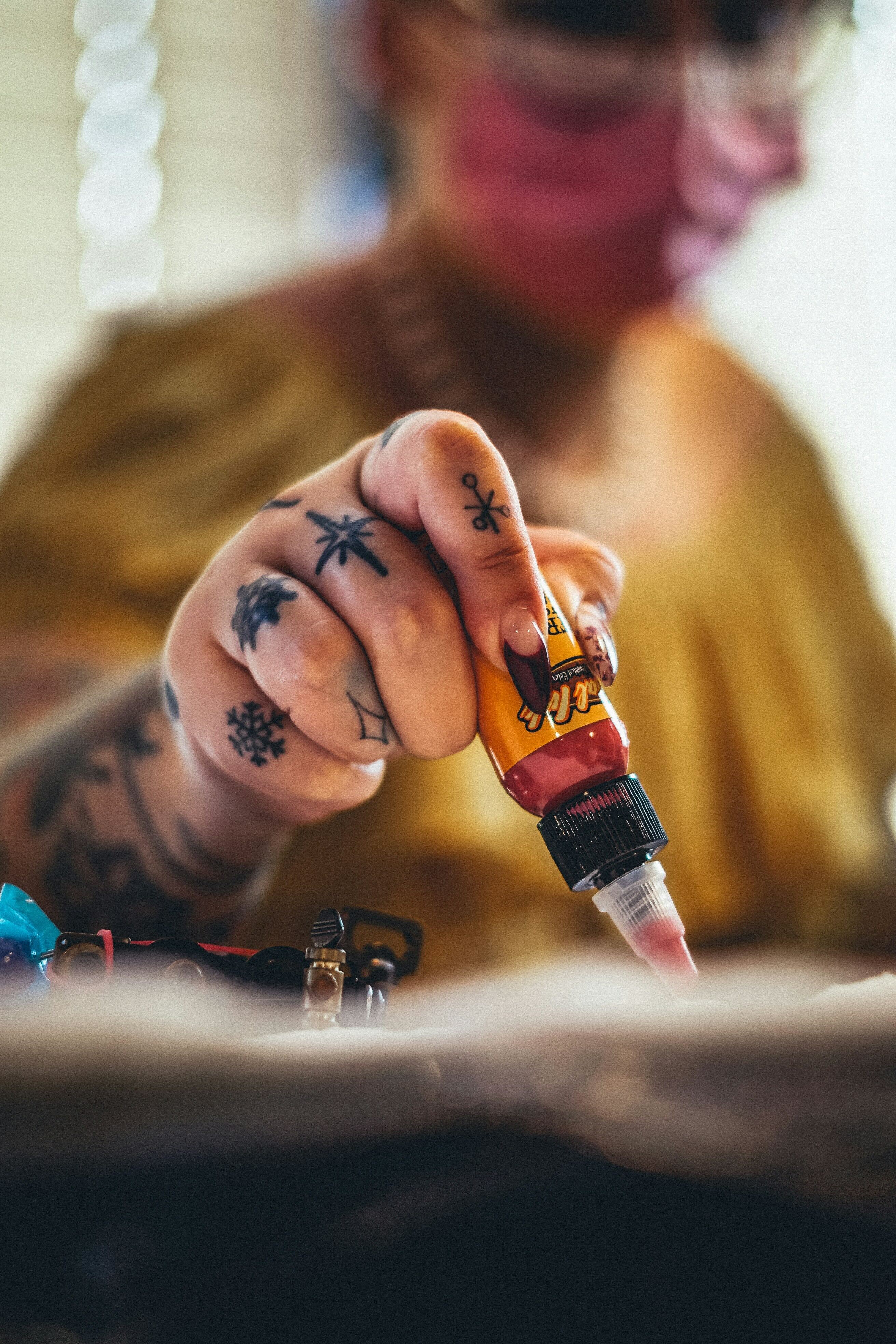
Tattoo Ink Safety Is Not a “Safe Ink List” Problem
Most people start with a simple question: "What ink is safe?" Or "what shop uses safe ink?" They want a list they can trust.
That list does not exist in a consumer-friendly way. Tattoo ink safety is shaped by training, research, and regulation. Those systems reduce risk. They do not operate like a shopping directory.
This post explains why there is no master list and what you can do instead.
The real question people are asking
When people search for safe tattoo ink, they usually mean one of two things. Which brand can I trust. Or which shop uses the right ink. Both are reasonable instincts. Neither has a clean answer because the tattoo safety world is not structured to publish a verified ink list or a verified studio directory.
The better approach is to understand what each safety layer does and where the gaps are. That is how you make better decisions before you sit down.
Key organizations and what they actually do
Alliance of Professional Tattooists (APT)
APT is a U.S.-based nonprofit focused on tattoo safety education, professional standards, and bloodborne pathogen training. Their work matters because it raises baseline studio practices.
What they do not do is maintain a public list of specific inks. They also do not publish a consumer directory of parlors by ink type.
European Society of Tattoo and Pigment Research (ESTP)
ESTP is research-focused. They study tattoo inks, pigments, and long-term health risks. Their work feeds into the science behind regulation and safety guidance, including EU restrictions.
What they do not do is publish a consumer safe ink list. They also do not keep a public studio directory.
International Body Modification Society (IBMS)
IBMS offers safety-focused certification and training, including hygiene and bloodborne pathogen education. It can help you find artists who pursued formal safety training.
What it does not do is certify inks or verify which studio uses which brand.
Global Tattoo Artists Association
This is described as a community network organized around ethics, hygiene, and professional support. It publishes guidelines and resources.
What it does not do is formal ink tracking or verified parlor directories.
None of these organizations exist to tell you which ink to buy. That is not a gap in the system. It is how the system is designed.
Is there a safe tattoo ink list
Not in a centralized, consumer-facing way. What exists instead are safety programs, research groups, and regulators that influence standards, restrictions, and responses to problems.
If you are looking for certainty, the system will frustrate you. If you are looking for practical risk reduction, the system becomes useful.
Regulatory oversight, split by region
Who regulates tattoo ink in the US
In the U.S., the FDA treats tattoo inks as cosmetics. The FDA monitors issues through adverse event reports and investigations. It can issue alerts and support recalls when contamination or other problems are found.
Does the FDA approve tattoo ink
The critical point in this framing is that the FDA has stated that no color additives are currently approved for injection into the skin. The FDA does not pre-approve inks before they go to market. It does not maintain a safe ink list.
Tattoo ink contaminated sealed bottle
Contamination has been documented in sealed bottles in past cases. That matters because it shows that brand reputation alone is not a complete safety strategy.
EU: REACH and ECHA
In Europe, REACH restricts hazardous chemicals used in tattoo inks and permanent makeup. ECHA enforces limits on more than 4,000 hazardous substances and sets concentration thresholds and labeling requirements.
REACH is strong on chemical composition restrictions. It does not cover handling failures, storage failures, supply chain problems, or individual allergic reactions.
Translate compliant correctly. REACH compliance means the formulation is designed to meet EU chemical restrictions. It does not mean you cannot react, a batch cannot be contaminated, or a studio cannot mishandle it.
What tattoo ink safety means in practice
Tattoo ink safety is not just brand choice. It involves:
The artist’s technique and application process
The studio’s storage and handling practices
Sourcing from verified distributors, not unknown resellers
Your body’s individual reaction profile
That is why safety efforts focus on education and process rather than publishing ranked lists of approved brands. Even a well-formulated ink can cause problems if it is mishandled, stored incorrectly, or sourced through a compromised supply chain.
If you want to understand how ink is handled and removed through the skin’s healing response, start here: how inkOUT works.
If you want to see the steps from consultation to treatment, read the treatment process.
Quick action checklist
Before you book a session, ask your artist:
What ink line are you using?
Can you show an SDS (Safety Data Sheet) if I ask?
Can you show the lot number and expiration date?
Where do you source your ink, manufacturer or verified distributor?
These are basic signals of a professional operation.
What’s next
Post 2 breaks down brand-level signals and what artists use to verify.
Next post: “Safer” Tattoo Ink Brands and Why Artists Trust Them
Tattoo Ink Safety Is Not a “Safe Ink List” Problem
Most people start with a simple question: "What ink is safe?" Or "what shop uses safe ink?" They want a list they can trust.
That list does not exist in a consumer-friendly way. Tattoo ink safety is shaped by training, research, and regulation. Those systems reduce risk. They do not operate like a shopping directory.
This post explains why there is no master list and what you can do instead.
The real question people are asking
When people search for safe tattoo ink, they usually mean one of two things. Which brand can I trust. Or which shop uses the right ink. Both are reasonable instincts. Neither has a clean answer because the tattoo safety world is not structured to publish a verified ink list or a verified studio directory.
The better approach is to understand what each safety layer does and where the gaps are. That is how you make better decisions before you sit down.
Key organizations and what they actually do
Alliance of Professional Tattooists (APT)
APT is a U.S.-based nonprofit focused on tattoo safety education, professional standards, and bloodborne pathogen training. Their work matters because it raises baseline studio practices.
What they do not do is maintain a public list of specific inks. They also do not publish a consumer directory of parlors by ink type.
European Society of Tattoo and Pigment Research (ESTP)
ESTP is research-focused. They study tattoo inks, pigments, and long-term health risks. Their work feeds into the science behind regulation and safety guidance, including EU restrictions.
What they do not do is publish a consumer safe ink list. They also do not keep a public studio directory.
International Body Modification Society (IBMS)
IBMS offers safety-focused certification and training, including hygiene and bloodborne pathogen education. It can help you find artists who pursued formal safety training.
What it does not do is certify inks or verify which studio uses which brand.
Global Tattoo Artists Association
This is described as a community network organized around ethics, hygiene, and professional support. It publishes guidelines and resources.
What it does not do is formal ink tracking or verified parlor directories.
None of these organizations exist to tell you which ink to buy. That is not a gap in the system. It is how the system is designed.
Is there a safe tattoo ink list
Not in a centralized, consumer-facing way. What exists instead are safety programs, research groups, and regulators that influence standards, restrictions, and responses to problems.
If you are looking for certainty, the system will frustrate you. If you are looking for practical risk reduction, the system becomes useful.
Regulatory oversight, split by region
Who regulates tattoo ink in the US
In the U.S., the FDA treats tattoo inks as cosmetics. The FDA monitors issues through adverse event reports and investigations. It can issue alerts and support recalls when contamination or other problems are found.
Does the FDA approve tattoo ink
The critical point in this framing is that the FDA has stated that no color additives are currently approved for injection into the skin. The FDA does not pre-approve inks before they go to market. It does not maintain a safe ink list.
Tattoo ink contaminated sealed bottle
Contamination has been documented in sealed bottles in past cases. That matters because it shows that brand reputation alone is not a complete safety strategy.
EU: REACH and ECHA
In Europe, REACH restricts hazardous chemicals used in tattoo inks and permanent makeup. ECHA enforces limits on more than 4,000 hazardous substances and sets concentration thresholds and labeling requirements.
REACH is strong on chemical composition restrictions. It does not cover handling failures, storage failures, supply chain problems, or individual allergic reactions.
Translate compliant correctly. REACH compliance means the formulation is designed to meet EU chemical restrictions. It does not mean you cannot react, a batch cannot be contaminated, or a studio cannot mishandle it.
What tattoo ink safety means in practice
Tattoo ink safety is not just brand choice. It involves:
The artist’s technique and application process
The studio’s storage and handling practices
Sourcing from verified distributors, not unknown resellers
Your body’s individual reaction profile
That is why safety efforts focus on education and process rather than publishing ranked lists of approved brands. Even a well-formulated ink can cause problems if it is mishandled, stored incorrectly, or sourced through a compromised supply chain.
If you want to understand how ink is handled and removed through the skin’s healing response, start here: how inkOUT works.
If you want to see the steps from consultation to treatment, read the treatment process.
Quick action checklist
Before you book a session, ask your artist:
What ink line are you using?
Can you show an SDS (Safety Data Sheet) if I ask?
Can you show the lot number and expiration date?
Where do you source your ink, manufacturer or verified distributor?
These are basic signals of a professional operation.
What’s next
Post 2 breaks down brand-level signals and what artists use to verify.
Next post: “Safer” Tattoo Ink Brands and Why Artists Trust Them
Tattoo Ink Safety Is Not a “Safe Ink List” Problem
Most people start with a simple question: "What ink is safe?" Or "what shop uses safe ink?" They want a list they can trust.
That list does not exist in a consumer-friendly way. Tattoo ink safety is shaped by training, research, and regulation. Those systems reduce risk. They do not operate like a shopping directory.
This post explains why there is no master list and what you can do instead.
The real question people are asking
When people search for safe tattoo ink, they usually mean one of two things. Which brand can I trust. Or which shop uses the right ink. Both are reasonable instincts. Neither has a clean answer because the tattoo safety world is not structured to publish a verified ink list or a verified studio directory.
The better approach is to understand what each safety layer does and where the gaps are. That is how you make better decisions before you sit down.
Key organizations and what they actually do
Alliance of Professional Tattooists (APT)
APT is a U.S.-based nonprofit focused on tattoo safety education, professional standards, and bloodborne pathogen training. Their work matters because it raises baseline studio practices.
What they do not do is maintain a public list of specific inks. They also do not publish a consumer directory of parlors by ink type.
European Society of Tattoo and Pigment Research (ESTP)
ESTP is research-focused. They study tattoo inks, pigments, and long-term health risks. Their work feeds into the science behind regulation and safety guidance, including EU restrictions.
What they do not do is publish a consumer safe ink list. They also do not keep a public studio directory.
International Body Modification Society (IBMS)
IBMS offers safety-focused certification and training, including hygiene and bloodborne pathogen education. It can help you find artists who pursued formal safety training.
What it does not do is certify inks or verify which studio uses which brand.
Global Tattoo Artists Association
This is described as a community network organized around ethics, hygiene, and professional support. It publishes guidelines and resources.
What it does not do is formal ink tracking or verified parlor directories.
None of these organizations exist to tell you which ink to buy. That is not a gap in the system. It is how the system is designed.
Is there a safe tattoo ink list
Not in a centralized, consumer-facing way. What exists instead are safety programs, research groups, and regulators that influence standards, restrictions, and responses to problems.
If you are looking for certainty, the system will frustrate you. If you are looking for practical risk reduction, the system becomes useful.
Regulatory oversight, split by region
Who regulates tattoo ink in the US
In the U.S., the FDA treats tattoo inks as cosmetics. The FDA monitors issues through adverse event reports and investigations. It can issue alerts and support recalls when contamination or other problems are found.
Does the FDA approve tattoo ink
The critical point in this framing is that the FDA has stated that no color additives are currently approved for injection into the skin. The FDA does not pre-approve inks before they go to market. It does not maintain a safe ink list.
Tattoo ink contaminated sealed bottle
Contamination has been documented in sealed bottles in past cases. That matters because it shows that brand reputation alone is not a complete safety strategy.
EU: REACH and ECHA
In Europe, REACH restricts hazardous chemicals used in tattoo inks and permanent makeup. ECHA enforces limits on more than 4,000 hazardous substances and sets concentration thresholds and labeling requirements.
REACH is strong on chemical composition restrictions. It does not cover handling failures, storage failures, supply chain problems, or individual allergic reactions.
Translate compliant correctly. REACH compliance means the formulation is designed to meet EU chemical restrictions. It does not mean you cannot react, a batch cannot be contaminated, or a studio cannot mishandle it.
What tattoo ink safety means in practice
Tattoo ink safety is not just brand choice. It involves:
The artist’s technique and application process
The studio’s storage and handling practices
Sourcing from verified distributors, not unknown resellers
Your body’s individual reaction profile
That is why safety efforts focus on education and process rather than publishing ranked lists of approved brands. Even a well-formulated ink can cause problems if it is mishandled, stored incorrectly, or sourced through a compromised supply chain.
If you want to understand how ink is handled and removed through the skin’s healing response, start here: how inkOUT works.
If you want to see the steps from consultation to treatment, read the treatment process.
Quick action checklist
Before you book a session, ask your artist:
What ink line are you using?
Can you show an SDS (Safety Data Sheet) if I ask?
Can you show the lot number and expiration date?
Where do you source your ink, manufacturer or verified distributor?
These are basic signals of a professional operation.
What’s next
Post 2 breaks down brand-level signals and what artists use to verify.
Next post: “Safer” Tattoo Ink Brands and Why Artists Trust Them

Individual results may vary. Safe when performed by certified technicians following proper protocols and aftercare guidelines. Rejuvatek Aesthetics™ is a registered trademark.
All rights reserved. Rejuvatek Medical Inc © 2026.
Individual results may vary. Safe when performed by certified technicians following proper protocols and aftercare guidelines. Rejuvatek Aesthetics™ is a registered trademark.
All rights reserved. Rejuvatek Medical Inc © 2026.
Individual results may vary. Safe when performed by certified technicians following proper protocols and aftercare guidelines. Rejuvatek Aesthetics™ is a registered trademark.
All rights reserved. Rejuvatek Medical Inc © 2026.