

What Tattoo Ink Is Made Of and Which Pigments Are Generally Considered Safer
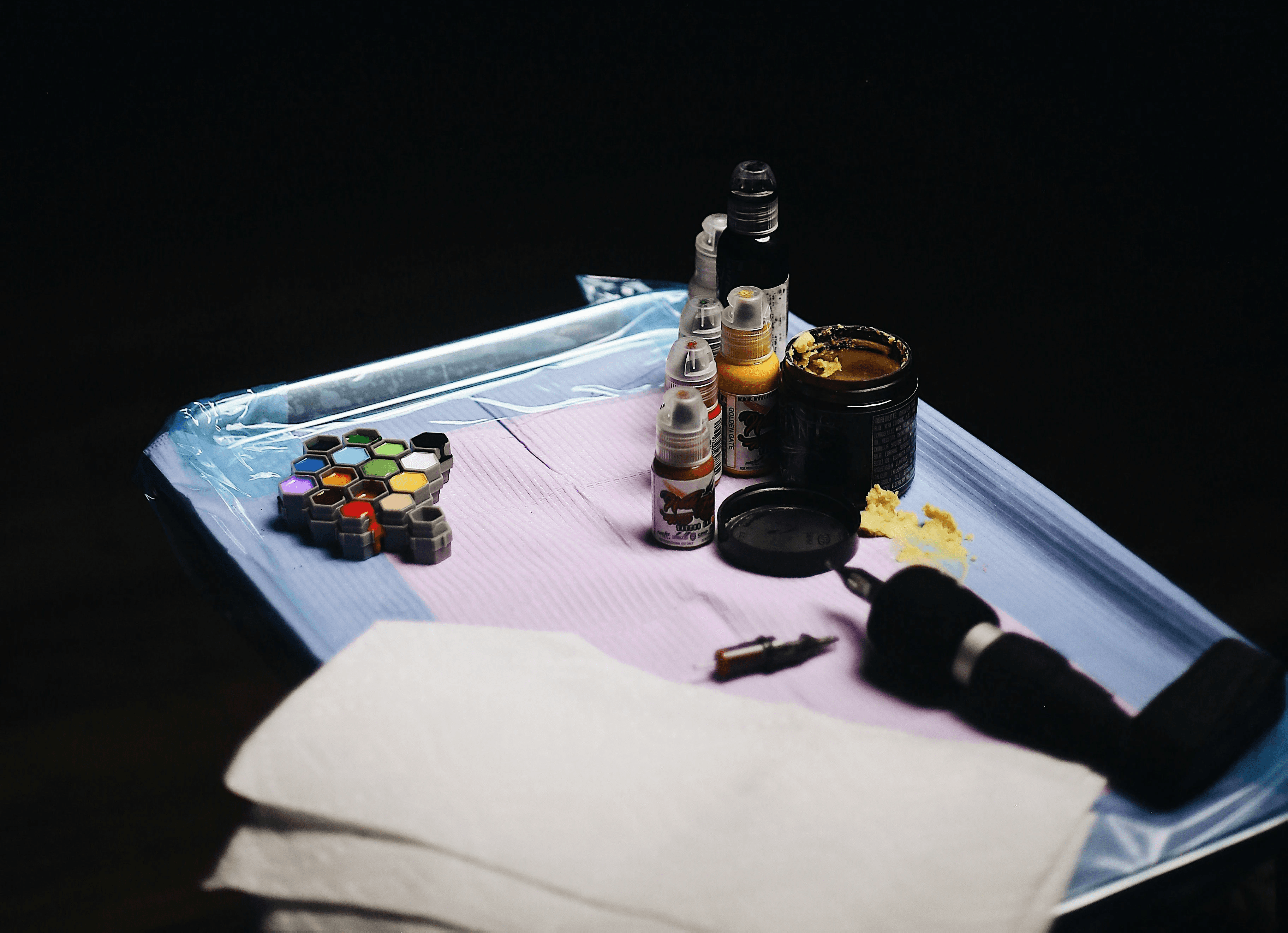
If you want to evaluate ink beyond brand marketing, you need to understand what is actually in it. This post covers the anatomy of tattoo ink, the pigment families that matter, and practical safety checks that do not require trusting a label.
Tattoo ink anatomy
Pigments
Pigments are the solid color particles suspended in the carrier liquid. They determine hue, saturation, and lightfastness. They are also what stays in your skin. Pigment identity is documented via CI numbers, a standardized system for identifying compounds.
Carriers
Carriers keep pigment particles suspended and regulate flow. Common carrier components include distilled water, glycerin, isopropyl or ethyl alcohol, witch hazel, and propylene glycol. A cleaner carrier formula is often framed as fewer additive variables.
Additives
Additives may include preservatives, pH stabilizers, or surfactants. Reputable brands disclose these via SDS. Additives that are not disclosed are a gap in verifiability.
Pigment families
Carbon Black
Carbon black is the most common base for black and gray inks. It is often listed as Pigment Black 7. It is widely used and described as generally associated with lower allergic reaction rates compared to some color pigments.
Iron Oxides
Iron oxides are used in black, brown, and warm-tone pigments. They are also common in permanent makeup formulas. They are described as having a long use history and relatively well-understood tissue behavior.
Titanium Dioxide (CI 77891)
Titanium dioxide is used primarily in white inks and to lighten colors. It has faced increased scrutiny in EU regulatory frameworks due to concerns about nanoparticle behavior in tissue in this framing. The science is described as still developing.
Phthalocyanines
This pigment class is commonly used for blues and greens. Phthalocyanines are synthetic organic pigments with strong color stability. They are often treated as lower reaction risk compared to some red and yellow pigments in this framing.
Quinacridones
Quinacridones are used for reds, violets, and magentas. They are described as having good stability and a relatively favorable reaction profile compared to older azo-based reds.
Azo pigments
Azo pigments are used across many colors. Some face restrictions under EU REACH frameworks due to concerns about aromatic amine release. EU-compliant formulations avoid restricted azo compounds.
Pigments by tattoo style, generally considered safer
Black and gray
Carbon black and iron oxide pigments are the standard base. They are described as generally associated with lower rates of allergic reactions compared to bright color pigments. Fewer components means fewer variables.
Color realism and full color
Phthalocyanines for blues and greens, quinacridones for reds and violets, carbon black for depth, and titanium dioxide in lighter mixes are described as common. REACH-compliant formulations avoid restricted azo pigments.
Permanent makeup, PMU
Iron oxides and titanium dioxide dominate PMU formulas. CI number transparency is especially important here because PMU sits in thinner, more visible tissue.
UV and glow inks
UV-reactive inks use compounds not present in standard formulas. Long-term tissue behavior is described as not well-studied. SDS documentation for UV inks is often thinner than for standard lines in this framing. Approach with extra caution and extra verification.
Why black ink is usually the safest
Not always, but generally:
Black inks typically contain fewer pigment components
Carbon black is described as stable and well-characterized
Allergic reactions to black ink occur, but at lower rates than many bright colors in this framing
Black inks are less likely to contain restricted azo compounds
Practical safety checks that do not require trusting marketing
These apply regardless of brand, style, or studio reputation:
Ask for the SDS for the specific ink being used
Check CI numbers when available
If you have any allergy history, discuss a patch test before a full session
Avoid purchasing or requesting inks from unverified online sellers
For any ink with a documented recall or contamination flag, lot number verification is not optional
If you want to understand the inkOUT process from consultation through treatment, start with the treatment process.
Series wrap
Across these three posts, you now have:
Who influences tattoo ink safety and why no master list exists
Which brands are cited as safer and what signals to verify
What ink is made of, which pigments matter by style, and what checks to run before you sit
If you want to evaluate ink beyond brand marketing, you need to understand what is actually in it. This post covers the anatomy of tattoo ink, the pigment families that matter, and practical safety checks that do not require trusting a label.
Tattoo ink anatomy
Pigments
Pigments are the solid color particles suspended in the carrier liquid. They determine hue, saturation, and lightfastness. They are also what stays in your skin. Pigment identity is documented via CI numbers, a standardized system for identifying compounds.
Carriers
Carriers keep pigment particles suspended and regulate flow. Common carrier components include distilled water, glycerin, isopropyl or ethyl alcohol, witch hazel, and propylene glycol. A cleaner carrier formula is often framed as fewer additive variables.
Additives
Additives may include preservatives, pH stabilizers, or surfactants. Reputable brands disclose these via SDS. Additives that are not disclosed are a gap in verifiability.
Pigment families
Carbon Black
Carbon black is the most common base for black and gray inks. It is often listed as Pigment Black 7. It is widely used and described as generally associated with lower allergic reaction rates compared to some color pigments.
Iron Oxides
Iron oxides are used in black, brown, and warm-tone pigments. They are also common in permanent makeup formulas. They are described as having a long use history and relatively well-understood tissue behavior.
Titanium Dioxide (CI 77891)
Titanium dioxide is used primarily in white inks and to lighten colors. It has faced increased scrutiny in EU regulatory frameworks due to concerns about nanoparticle behavior in tissue in this framing. The science is described as still developing.
Phthalocyanines
This pigment class is commonly used for blues and greens. Phthalocyanines are synthetic organic pigments with strong color stability. They are often treated as lower reaction risk compared to some red and yellow pigments in this framing.
Quinacridones
Quinacridones are used for reds, violets, and magentas. They are described as having good stability and a relatively favorable reaction profile compared to older azo-based reds.
Azo pigments
Azo pigments are used across many colors. Some face restrictions under EU REACH frameworks due to concerns about aromatic amine release. EU-compliant formulations avoid restricted azo compounds.
Pigments by tattoo style, generally considered safer
Black and gray
Carbon black and iron oxide pigments are the standard base. They are described as generally associated with lower rates of allergic reactions compared to bright color pigments. Fewer components means fewer variables.
Color realism and full color
Phthalocyanines for blues and greens, quinacridones for reds and violets, carbon black for depth, and titanium dioxide in lighter mixes are described as common. REACH-compliant formulations avoid restricted azo pigments.
Permanent makeup, PMU
Iron oxides and titanium dioxide dominate PMU formulas. CI number transparency is especially important here because PMU sits in thinner, more visible tissue.
UV and glow inks
UV-reactive inks use compounds not present in standard formulas. Long-term tissue behavior is described as not well-studied. SDS documentation for UV inks is often thinner than for standard lines in this framing. Approach with extra caution and extra verification.
Why black ink is usually the safest
Not always, but generally:
Black inks typically contain fewer pigment components
Carbon black is described as stable and well-characterized
Allergic reactions to black ink occur, but at lower rates than many bright colors in this framing
Black inks are less likely to contain restricted azo compounds
Practical safety checks that do not require trusting marketing
These apply regardless of brand, style, or studio reputation:
Ask for the SDS for the specific ink being used
Check CI numbers when available
If you have any allergy history, discuss a patch test before a full session
Avoid purchasing or requesting inks from unverified online sellers
For any ink with a documented recall or contamination flag, lot number verification is not optional
If you want to understand the inkOUT process from consultation through treatment, start with the treatment process.
Series wrap
Across these three posts, you now have:
Who influences tattoo ink safety and why no master list exists
Which brands are cited as safer and what signals to verify
What ink is made of, which pigments matter by style, and what checks to run before you sit
If you want to evaluate ink beyond brand marketing, you need to understand what is actually in it. This post covers the anatomy of tattoo ink, the pigment families that matter, and practical safety checks that do not require trusting a label.
Tattoo ink anatomy
Pigments
Pigments are the solid color particles suspended in the carrier liquid. They determine hue, saturation, and lightfastness. They are also what stays in your skin. Pigment identity is documented via CI numbers, a standardized system for identifying compounds.
Carriers
Carriers keep pigment particles suspended and regulate flow. Common carrier components include distilled water, glycerin, isopropyl or ethyl alcohol, witch hazel, and propylene glycol. A cleaner carrier formula is often framed as fewer additive variables.
Additives
Additives may include preservatives, pH stabilizers, or surfactants. Reputable brands disclose these via SDS. Additives that are not disclosed are a gap in verifiability.
Pigment families
Carbon Black
Carbon black is the most common base for black and gray inks. It is often listed as Pigment Black 7. It is widely used and described as generally associated with lower allergic reaction rates compared to some color pigments.
Iron Oxides
Iron oxides are used in black, brown, and warm-tone pigments. They are also common in permanent makeup formulas. They are described as having a long use history and relatively well-understood tissue behavior.
Titanium Dioxide (CI 77891)
Titanium dioxide is used primarily in white inks and to lighten colors. It has faced increased scrutiny in EU regulatory frameworks due to concerns about nanoparticle behavior in tissue in this framing. The science is described as still developing.
Phthalocyanines
This pigment class is commonly used for blues and greens. Phthalocyanines are synthetic organic pigments with strong color stability. They are often treated as lower reaction risk compared to some red and yellow pigments in this framing.
Quinacridones
Quinacridones are used for reds, violets, and magentas. They are described as having good stability and a relatively favorable reaction profile compared to older azo-based reds.
Azo pigments
Azo pigments are used across many colors. Some face restrictions under EU REACH frameworks due to concerns about aromatic amine release. EU-compliant formulations avoid restricted azo compounds.
Pigments by tattoo style, generally considered safer
Black and gray
Carbon black and iron oxide pigments are the standard base. They are described as generally associated with lower rates of allergic reactions compared to bright color pigments. Fewer components means fewer variables.
Color realism and full color
Phthalocyanines for blues and greens, quinacridones for reds and violets, carbon black for depth, and titanium dioxide in lighter mixes are described as common. REACH-compliant formulations avoid restricted azo pigments.
Permanent makeup, PMU
Iron oxides and titanium dioxide dominate PMU formulas. CI number transparency is especially important here because PMU sits in thinner, more visible tissue.
UV and glow inks
UV-reactive inks use compounds not present in standard formulas. Long-term tissue behavior is described as not well-studied. SDS documentation for UV inks is often thinner than for standard lines in this framing. Approach with extra caution and extra verification.
Why black ink is usually the safest
Not always, but generally:
Black inks typically contain fewer pigment components
Carbon black is described as stable and well-characterized
Allergic reactions to black ink occur, but at lower rates than many bright colors in this framing
Black inks are less likely to contain restricted azo compounds
Practical safety checks that do not require trusting marketing
These apply regardless of brand, style, or studio reputation:
Ask for the SDS for the specific ink being used
Check CI numbers when available
If you have any allergy history, discuss a patch test before a full session
Avoid purchasing or requesting inks from unverified online sellers
For any ink with a documented recall or contamination flag, lot number verification is not optional
If you want to understand the inkOUT process from consultation through treatment, start with the treatment process.
Series wrap
Across these three posts, you now have:
Who influences tattoo ink safety and why no master list exists
Which brands are cited as safer and what signals to verify
What ink is made of, which pigments matter by style, and what checks to run before you sit

Individual results may vary. Safe when performed by certified technicians following proper protocols and aftercare guidelines. Rejuvatek Aesthetics™ is a registered trademark.
All rights reserved. Rejuvatek Medical Inc © 2026.
Individual results may vary. Safe when performed by certified technicians following proper protocols and aftercare guidelines. Rejuvatek Aesthetics™ is a registered trademark.
All rights reserved. Rejuvatek Medical Inc © 2026.
Individual results may vary. Safe when performed by certified technicians following proper protocols and aftercare guidelines. Rejuvatek Aesthetics™ is a registered trademark.
All rights reserved. Rejuvatek Medical Inc © 2026.