

Tattoo Pain Chart: Least to Most Painful Body Areas Explained
Several factors work together to shape how a tattoo feels when getting it applied. Pain is always personal, but these are the main variables for the pain level while getting a tattoo:
Body part
Where your tattoo is going to be placed on your body can impact the pain associated with the design. Areas with thin skin, lots of nerve endings, or bone close to the surface usually hurt more. Areas with more muscle and fat padding often hurt less.
Pain tolerance
People process pain differently. One person might describe a placement as “sharp but fine,” another as “very intense.” Your stress levels, sleep, and past experiences all play a role in your tattoo pain tolerance.
Tattoo size and complexity
A small line tattoo in a sensitive spot might be brief and manageable, pain wise. A large, shaded piece over the same area will take longer and will probably feel more intense. More passes over the skin generally mean more discomfort in an area.
Artist technique
Experienced artists tend to work more efficiently and steadily. A consistent, controlled motion often feels better than a heavy or uneven hand (this is why picking an artist you like and trust can be important!).
Hydration and general health
Being well-rested, hydrated, and having eaten a solid meal before your appointment can make a noticeable difference. Dehydration, hunger, or being run-down can make pain feel sharper. Caffeine intake can also increase pain sensitivity, so make sure you’re not over-caffeinated before getting new ink.
Tattoo styleBold, densely-packed lines and heavy color saturation often feel stronger than light dotwork or minimal linework. Repeated passes in the same spot will always increase sensation.
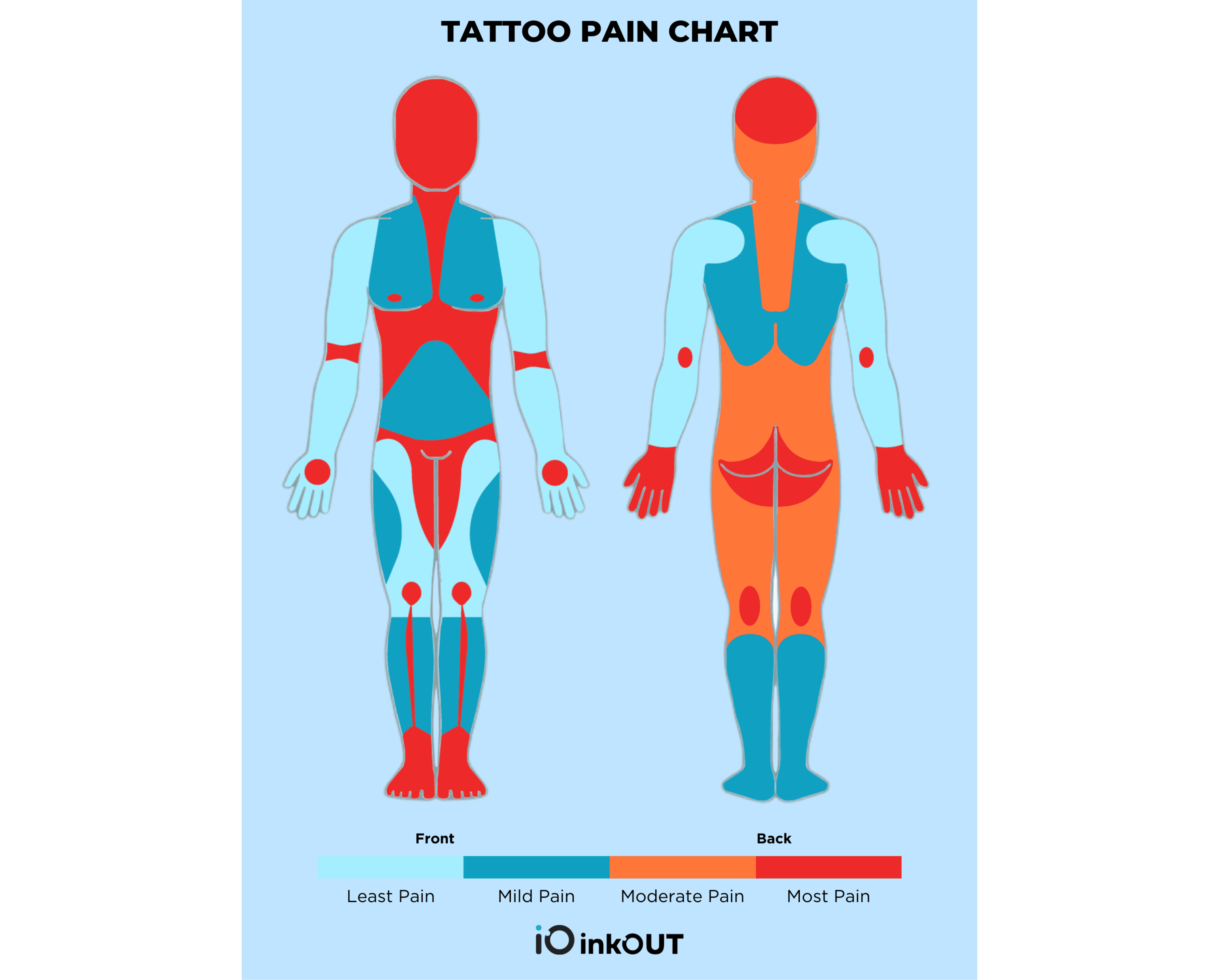
Tattoo Pain Chart (Front + Back of the Body)
Here’s how most people and artists describe tattoo pain areas across the body:
Areas with less fat, more nerves, and thin skin over bone → higher pain
Areas with more muscle, more padding, and fewer nerves → lower pain
Several factors work together to shape how a tattoo feels when getting it applied. Pain is always personal, but these are the main variables for the pain level while getting a tattoo:
Body part
Where your tattoo is going to be placed on your body can impact the pain associated with the design. Areas with thin skin, lots of nerve endings, or bone close to the surface usually hurt more. Areas with more muscle and fat padding often hurt less.
Pain tolerance
People process pain differently. One person might describe a placement as “sharp but fine,” another as “very intense.” Your stress levels, sleep, and past experiences all play a role in your tattoo pain tolerance.
Tattoo size and complexity
A small line tattoo in a sensitive spot might be brief and manageable, pain wise. A large, shaded piece over the same area will take longer and will probably feel more intense. More passes over the skin generally mean more discomfort in an area.
Artist technique
Experienced artists tend to work more efficiently and steadily. A consistent, controlled motion often feels better than a heavy or uneven hand (this is why picking an artist you like and trust can be important!).
Hydration and general health
Being well-rested, hydrated, and having eaten a solid meal before your appointment can make a noticeable difference. Dehydration, hunger, or being run-down can make pain feel sharper. Caffeine intake can also increase pain sensitivity, so make sure you’re not over-caffeinated before getting new ink.
Tattoo styleBold, densely-packed lines and heavy color saturation often feel stronger than light dotwork or minimal linework. Repeated passes in the same spot will always increase sensation.
Tattoo Pain Chart (Front + Back of the Body)
Here’s how most people and artists describe tattoo pain areas across the body:
Areas with less fat, more nerves, and thin skin over bone → higher pain
Areas with more muscle, more padding, and fewer nerves → lower pain
Several factors work together to shape how a tattoo feels when getting it applied. Pain is always personal, but these are the main variables for the pain level while getting a tattoo:
Body part
Where your tattoo is going to be placed on your body can impact the pain associated with the design. Areas with thin skin, lots of nerve endings, or bone close to the surface usually hurt more. Areas with more muscle and fat padding often hurt less.
Pain tolerance
People process pain differently. One person might describe a placement as “sharp but fine,” another as “very intense.” Your stress levels, sleep, and past experiences all play a role in your tattoo pain tolerance.
Tattoo size and complexity
A small line tattoo in a sensitive spot might be brief and manageable, pain wise. A large, shaded piece over the same area will take longer and will probably feel more intense. More passes over the skin generally mean more discomfort in an area.
Artist technique
Experienced artists tend to work more efficiently and steadily. A consistent, controlled motion often feels better than a heavy or uneven hand (this is why picking an artist you like and trust can be important!).
Hydration and general health
Being well-rested, hydrated, and having eaten a solid meal before your appointment can make a noticeable difference. Dehydration, hunger, or being run-down can make pain feel sharper. Caffeine intake can also increase pain sensitivity, so make sure you’re not over-caffeinated before getting new ink.
Tattoo styleBold, densely-packed lines and heavy color saturation often feel stronger than light dotwork or minimal linework. Repeated passes in the same spot will always increase sensation.
Tattoo Pain Chart (Front + Back of the Body)
Here’s how most people and artists describe tattoo pain areas across the body:
Areas with less fat, more nerves, and thin skin over bone → higher pain
Areas with more muscle, more padding, and fewer nerves → lower pain
Most Painful Areas to Get a Tattoo
These are commonly reported as the most painful tattoo spots. They combine thin skin, exposed bone, and high nerve density.
Ribcage
Thin skin over bone and lots of movement with each breath make this one of the highest-pain placements.
Feet and Ankles
Very little padding and many nerves close to the surface. Simple designs here can feel sharper than their size suggests.
Hands and Fingers
Small area, thin skin, and lots of tendons. Sessions are usually short, but the pain can be sharp and direct. Fingers rank among the most painful areas for both getting and removing tattoos. The full guide on finger tattoos, including design, healing, fading, and aftercare, covers what that means long term.
Spine
Tattooing directly over the vertebrae often feels intense and uncomfortable. The combination of bone and central nerves makes this a high-pain area on most charts.
Knees and Elbows
Thin skin stretched over bone. Both the front (kneecap, elbow point) and folds can be sensitive.
Armpits
High nerve density and constant movement. Widely considered one of the most painful placements for a tattoo.
Groin / Inner Thigh
Thin, sensitive skin and many lymph nodes reside here. Even small designs here are usually rated as high on tattoo pain levels.
Neck and Throat
Thin skin, many nerve endings, and vibration over sensitive structures make these areas intense for most people.
Moderately Painful Areas
These areas often land in the “medium” range in tattoo pain ranking - noticeable, but manageable for most clients.
Chest
The center of the chest and over the sternum can feel strong, especially for lean builds. Areas with more muscle may feel slightly less intense.
Stomach
Soft tissue means less bone contact, but the skin can be sensitive, especially around the navel and on the sides.
Lower Back
Near the spine can be more intense; areas with more muscle and tissue tend to feel moderate.
Buttocks
Plenty of padding, but pressure and stretching of the skin can still feel tender, especially close to the lower back or upper thigh.
Calves
Muscle and padding make this a mid-range area for many people. Often recommended once someone knows how their body handles tattoo pain.
Least Painful Areas
These are the least painful places to get a tattoo for many people, especially first-timers. They generally have more muscle, more fat, or fewer exposed nerves.
Upper Arms
The outer upper arm is one of the most commonly recommended low-pain spots. Good for first tattoos and larger work.
Shoulders
Rounded shape, decent padding, and relatively fewer nerves make the outer shoulder a common “easier” placement.
Outer Thighs
Lots of muscle and soft tissue. The outer thigh tends to feel much less intense than the inner thigh.
Forearms
The outer forearm usually rates low to moderate on a tattoo pain guide, especially for medium-sized designs. It’s a popular spot for people who want visible ink with manageable pain.
How to Reduce Tattoo Pain
You can’t remove pain completely, but you can make it more manageable.
Hydrate well the day before and day of your appointment
Eat a full meal 1-2 hours before you sit down for your tattoo
Avoid alcohol and blood-thinning substances
Control your breathing during the session (steady, slow breaths)
Choose a skilled artist whose work you trust
Take short breaks if you start to feel overwhelmed
These simple steps help keep your body more stable and your pain more predictable.
Aftercare to Help with Pain
A lot of tattoo discomfort happens after you leave the studio. Good aftercare keeps pain down and healing on track.
Keep the tattoo clean as directed by your artist
Moisturize with products they recommend
Avoid picking at flaking skin or scabs
Stay out of direct sun exposure on the fresh tattoo
Wear loose clothing to prevent rubbing
Interesting Tattoo Facts
A few numbers provide useful context around tattoos, pain, and long-term choices:
About 32% of U.S. adults have at least one tattoo (Pew Research Center)
Roughly 24% of tattooed Americans say they regret at least one of their tattoos (Pew Research Center)
These figures don’t say how painful tattoos are, but they do show how common tattoos are - and how often people might change their minds about tattoos they’ve had done. If you find yourself regretting a tattoo, we’re here to provide a health-conscious, non-laser tattoo removal option for you.
When Pain Affects Your Tattoo Decisions
Pain doesn’t just matter in the moment. It can influence tattoo pain areas you choose, how big you go, and whether you compromise on the design or placement you actually wanted.
Some people:
Pick an easier, low-pain area instead of the spot that fit the design best
Go smaller or simpler than planned to “get it over with”
Avoid certain placements entirely after one very painful session
Sometimes those choices feel right long-term. Other times, they lead to regret about placement, size, or design - not just the tattoo itself.
If pain influenced a past decision and you’re no longer happy with the result, options like tattoo revision, cover-up, or full removal can help reset your canvas. Non-laser approaches such as inkOUT® work with your skin’s natural healing process to expel ink out of the skin, and can be useful when someone wants to change or reduce an existing tattoo before getting something new.
A tattoo pain chart is only a guide; pain will always vary from person to person, and even from session to session. But knowing the tattoo pain by body part, the most and least painful placements, and the basic tattoo pain factors can give you a clearer starting point so you can plan your tattoo around what you want on your body, not just what you’re worried might hurt.
You can plan your tattoo around what you want on your body, not just what you’re worried might hurt.
Most Painful Areas to Get a Tattoo
These are commonly reported as the most painful tattoo spots. They combine thin skin, exposed bone, and high nerve density.
Ribcage
Thin skin over bone and lots of movement with each breath make this one of the highest-pain placements.
Feet and Ankles
Very little padding and many nerves close to the surface. Simple designs here can feel sharper than their size suggests.
Hands and Fingers
Small area, thin skin, and lots of tendons. Sessions are usually short, but the pain can be sharp and direct. Fingers rank among the most painful areas for both getting and removing tattoos. The full guide on finger tattoos, including design, healing, fading, and aftercare, covers what that means long term.
Spine
Tattooing directly over the vertebrae often feels intense and uncomfortable. The combination of bone and central nerves makes this a high-pain area on most charts.
Knees and Elbows
Thin skin stretched over bone. Both the front (kneecap, elbow point) and folds can be sensitive.
Armpits
High nerve density and constant movement. Widely considered one of the most painful placements for a tattoo.
Groin / Inner Thigh
Thin, sensitive skin and many lymph nodes reside here. Even small designs here are usually rated as high on tattoo pain levels.
Neck and Throat
Thin skin, many nerve endings, and vibration over sensitive structures make these areas intense for most people.
Moderately Painful Areas
These areas often land in the “medium” range in tattoo pain ranking - noticeable, but manageable for most clients.
Chest
The center of the chest and over the sternum can feel strong, especially for lean builds. Areas with more muscle may feel slightly less intense.
Stomach
Soft tissue means less bone contact, but the skin can be sensitive, especially around the navel and on the sides.
Lower Back
Near the spine can be more intense; areas with more muscle and tissue tend to feel moderate.
Buttocks
Plenty of padding, but pressure and stretching of the skin can still feel tender, especially close to the lower back or upper thigh.
Calves
Muscle and padding make this a mid-range area for many people. Often recommended once someone knows how their body handles tattoo pain.
Least Painful Areas
These are the least painful places to get a tattoo for many people, especially first-timers. They generally have more muscle, more fat, or fewer exposed nerves.
Upper Arms
The outer upper arm is one of the most commonly recommended low-pain spots. Good for first tattoos and larger work.
Shoulders
Rounded shape, decent padding, and relatively fewer nerves make the outer shoulder a common “easier” placement.
Outer Thighs
Lots of muscle and soft tissue. The outer thigh tends to feel much less intense than the inner thigh.
Forearms
The outer forearm usually rates low to moderate on a tattoo pain guide, especially for medium-sized designs. It’s a popular spot for people who want visible ink with manageable pain.
How to Reduce Tattoo Pain
You can’t remove pain completely, but you can make it more manageable.
Hydrate well the day before and day of your appointment
Eat a full meal 1-2 hours before you sit down for your tattoo
Avoid alcohol and blood-thinning substances
Control your breathing during the session (steady, slow breaths)
Choose a skilled artist whose work you trust
Take short breaks if you start to feel overwhelmed
These simple steps help keep your body more stable and your pain more predictable.
Aftercare to Help with Pain
A lot of tattoo discomfort happens after you leave the studio. Good aftercare keeps pain down and healing on track.
Keep the tattoo clean as directed by your artist
Moisturize with products they recommend
Avoid picking at flaking skin or scabs
Stay out of direct sun exposure on the fresh tattoo
Wear loose clothing to prevent rubbing
Interesting Tattoo Facts
A few numbers provide useful context around tattoos, pain, and long-term choices:
About 32% of U.S. adults have at least one tattoo (Pew Research Center)
Roughly 24% of tattooed Americans say they regret at least one of their tattoos (Pew Research Center)
These figures don’t say how painful tattoos are, but they do show how common tattoos are - and how often people might change their minds about tattoos they’ve had done. If you find yourself regretting a tattoo, we’re here to provide a health-conscious, non-laser tattoo removal option for you.
When Pain Affects Your Tattoo Decisions
Pain doesn’t just matter in the moment. It can influence tattoo pain areas you choose, how big you go, and whether you compromise on the design or placement you actually wanted.
Some people:
Pick an easier, low-pain area instead of the spot that fit the design best
Go smaller or simpler than planned to “get it over with”
Avoid certain placements entirely after one very painful session
Sometimes those choices feel right long-term. Other times, they lead to regret about placement, size, or design - not just the tattoo itself.
If pain influenced a past decision and you’re no longer happy with the result, options like tattoo revision, cover-up, or full removal can help reset your canvas. Non-laser approaches such as inkOUT® work with your skin’s natural healing process to expel ink out of the skin, and can be useful when someone wants to change or reduce an existing tattoo before getting something new.
A tattoo pain chart is only a guide; pain will always vary from person to person, and even from session to session. But knowing the tattoo pain by body part, the most and least painful placements, and the basic tattoo pain factors can give you a clearer starting point so you can plan your tattoo around what you want on your body, not just what you’re worried might hurt.
You can plan your tattoo around what you want on your body, not just what you’re worried might hurt.
Most Painful Areas to Get a Tattoo
These are commonly reported as the most painful tattoo spots. They combine thin skin, exposed bone, and high nerve density.
Ribcage
Thin skin over bone and lots of movement with each breath make this one of the highest-pain placements.
Feet and Ankles
Very little padding and many nerves close to the surface. Simple designs here can feel sharper than their size suggests.
Hands and Fingers
Small area, thin skin, and lots of tendons. Sessions are usually short, but the pain can be sharp and direct. Fingers rank among the most painful areas for both getting and removing tattoos. The full guide on finger tattoos, including design, healing, fading, and aftercare, covers what that means long term.
Spine
Tattooing directly over the vertebrae often feels intense and uncomfortable. The combination of bone and central nerves makes this a high-pain area on most charts.
Knees and Elbows
Thin skin stretched over bone. Both the front (kneecap, elbow point) and folds can be sensitive.
Armpits
High nerve density and constant movement. Widely considered one of the most painful placements for a tattoo.
Groin / Inner Thigh
Thin, sensitive skin and many lymph nodes reside here. Even small designs here are usually rated as high on tattoo pain levels.
Neck and Throat
Thin skin, many nerve endings, and vibration over sensitive structures make these areas intense for most people.
Moderately Painful Areas
These areas often land in the “medium” range in tattoo pain ranking - noticeable, but manageable for most clients.
Chest
The center of the chest and over the sternum can feel strong, especially for lean builds. Areas with more muscle may feel slightly less intense.
Stomach
Soft tissue means less bone contact, but the skin can be sensitive, especially around the navel and on the sides.
Lower Back
Near the spine can be more intense; areas with more muscle and tissue tend to feel moderate.
Buttocks
Plenty of padding, but pressure and stretching of the skin can still feel tender, especially close to the lower back or upper thigh.
Calves
Muscle and padding make this a mid-range area for many people. Often recommended once someone knows how their body handles tattoo pain.
Least Painful Areas
These are the least painful places to get a tattoo for many people, especially first-timers. They generally have more muscle, more fat, or fewer exposed nerves.
Upper Arms
The outer upper arm is one of the most commonly recommended low-pain spots. Good for first tattoos and larger work.
Shoulders
Rounded shape, decent padding, and relatively fewer nerves make the outer shoulder a common “easier” placement.
Outer Thighs
Lots of muscle and soft tissue. The outer thigh tends to feel much less intense than the inner thigh.
Forearms
The outer forearm usually rates low to moderate on a tattoo pain guide, especially for medium-sized designs. It’s a popular spot for people who want visible ink with manageable pain.
How to Reduce Tattoo Pain
You can’t remove pain completely, but you can make it more manageable.
Hydrate well the day before and day of your appointment
Eat a full meal 1-2 hours before you sit down for your tattoo
Avoid alcohol and blood-thinning substances
Control your breathing during the session (steady, slow breaths)
Choose a skilled artist whose work you trust
Take short breaks if you start to feel overwhelmed
These simple steps help keep your body more stable and your pain more predictable.
Aftercare to Help with Pain
A lot of tattoo discomfort happens after you leave the studio. Good aftercare keeps pain down and healing on track.
Keep the tattoo clean as directed by your artist
Moisturize with products they recommend
Avoid picking at flaking skin or scabs
Stay out of direct sun exposure on the fresh tattoo
Wear loose clothing to prevent rubbing
Interesting Tattoo Facts
A few numbers provide useful context around tattoos, pain, and long-term choices:
About 32% of U.S. adults have at least one tattoo (Pew Research Center)
Roughly 24% of tattooed Americans say they regret at least one of their tattoos (Pew Research Center)
These figures don’t say how painful tattoos are, but they do show how common tattoos are - and how often people might change their minds about tattoos they’ve had done. If you find yourself regretting a tattoo, we’re here to provide a health-conscious, non-laser tattoo removal option for you.
When Pain Affects Your Tattoo Decisions
Pain doesn’t just matter in the moment. It can influence tattoo pain areas you choose, how big you go, and whether you compromise on the design or placement you actually wanted.
Some people:
Pick an easier, low-pain area instead of the spot that fit the design best
Go smaller or simpler than planned to “get it over with”
Avoid certain placements entirely after one very painful session
Sometimes those choices feel right long-term. Other times, they lead to regret about placement, size, or design - not just the tattoo itself.
If pain influenced a past decision and you’re no longer happy with the result, options like tattoo revision, cover-up, or full removal can help reset your canvas. Non-laser approaches such as inkOUT® work with your skin’s natural healing process to expel ink out of the skin, and can be useful when someone wants to change or reduce an existing tattoo before getting something new.
A tattoo pain chart is only a guide; pain will always vary from person to person, and even from session to session. But knowing the tattoo pain by body part, the most and least painful placements, and the basic tattoo pain factors can give you a clearer starting point so you can plan your tattoo around what you want on your body, not just what you’re worried might hurt.
You can plan your tattoo around what you want on your body, not just what you’re worried might hurt.

Individual results may vary. Safe when performed by certified technicians following proper protocols and aftercare guidelines. Rejuvatek Aesthetics™ is a registered trademark.
All rights reserved. Rejuvatek Medical Inc © 2026.
Individual results may vary. Safe when performed by certified technicians following proper protocols and aftercare guidelines. Rejuvatek Aesthetics™ is a registered trademark.
All rights reserved. Rejuvatek Medical Inc © 2026.
Individual results may vary. Safe when performed by certified technicians following proper protocols and aftercare guidelines. Rejuvatek Aesthetics™ is a registered trademark.
All rights reserved. Rejuvatek Medical Inc © 2026.